Global Kitchen Series No. 19 - Türkiye
Japan and Türkiye: A Friendship Shared Through Food and Travel
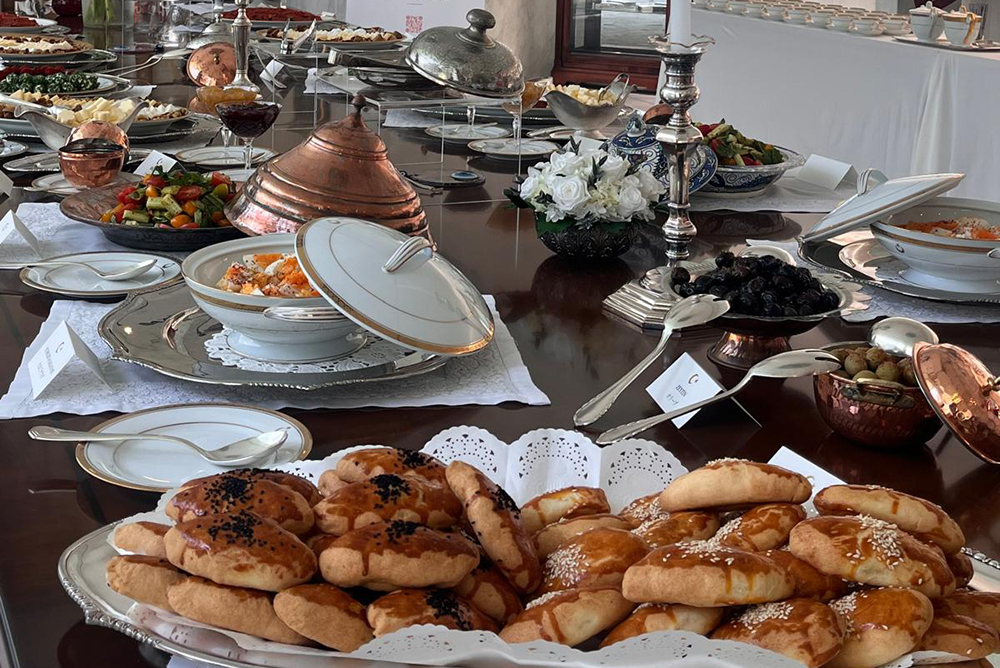
The friendship between Japan and Türkiye lives in historical memory, but also in the warmth of encounters between their people. In his interview with delicious Japan, the Ambassador of Türkiye to Japan spoke of a relationship sustained by mutual respect and solidarity, and of the opportunities that food, tourism and culture offer to deepen that connection. The rescue of Ottoman sailors following the Ertuğrul frigate disaster in 1890 remains a powerful symbol of this friendship. Another chapter came in 1985, when Türkiye sent aircraft to evacuate Japanese citizens from Tehran during the Iran–Iraq War. More recently, assistance following devastating earthquakes in both countries has reaffirmed their willingness to help each other. For the Ambassador, these stories carry a responsibility: their meaning must reach younger generations. Learning about the friendship matters, but experiencing it firsthand matters too. A journey, a shared meal, or a conversation with local people can turn an inherited story into a personal connection.
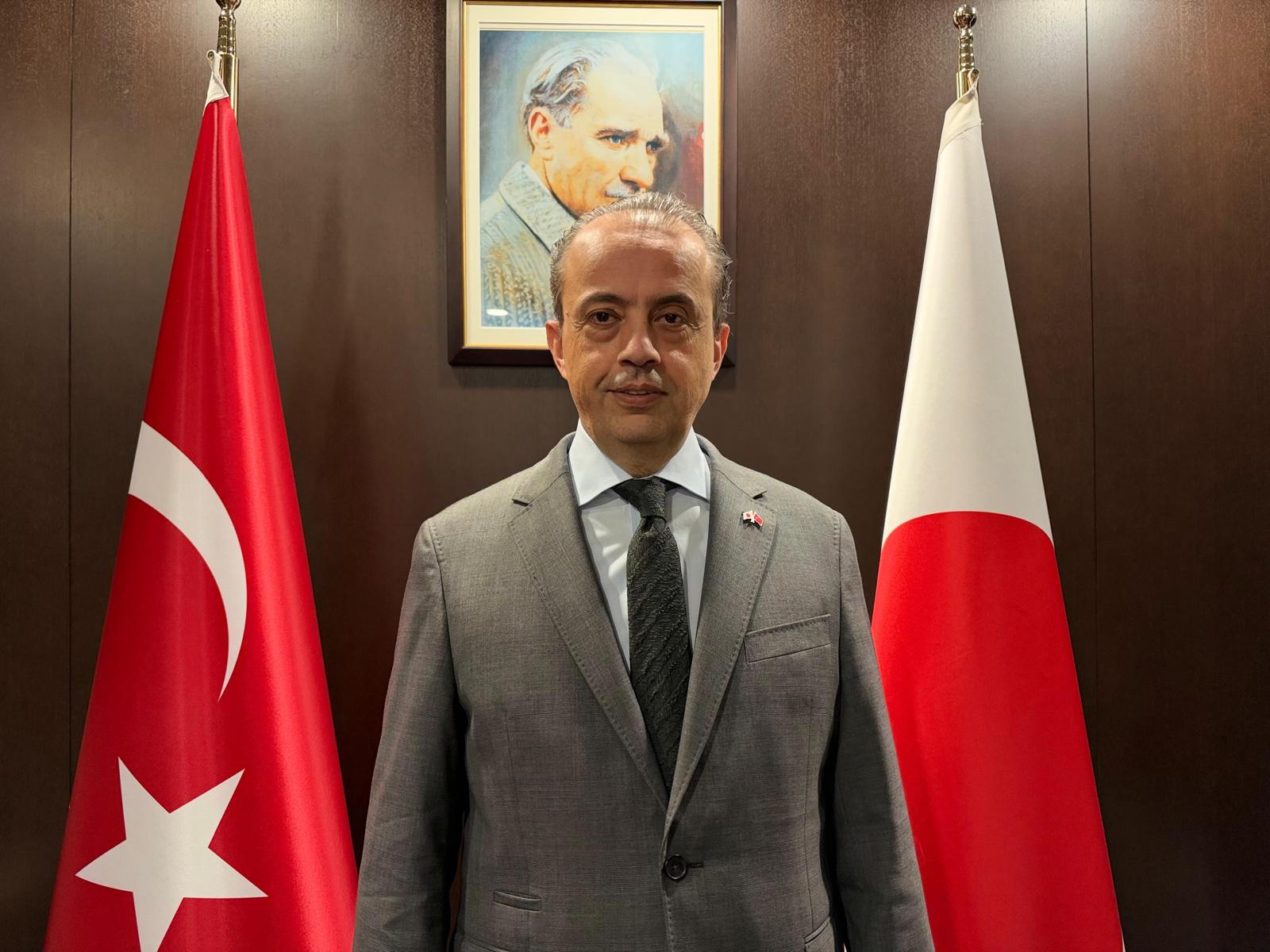 Oğuzhan Ertuğrul
Ambassador, Embassy of the Republic of Türkiye
Türkiye and Japan have enjoyed a long and special relationship. From your perspective as Ambassador, how would you describe the relationship between the two countries today, and what would you particularly like to strengthen during your tenure in Japan?
Türkiye and Japan enjoy a unique friendship with deep historical roots, but also a partnership with enormous potential for the future. Our relationship is not simply a history of diplomatic ties, but also a story of mutual respect, solidarity and genuine friendship between our peoples.
The Ertuğrul frigate disaster of 1890 remains one of the most powerful symbols of this friendship. The compassion and hospitality demonstrated by the Japanese people to the Ottoman sailors have created an ever-lasting bond that has continued to inspire our relations.
This friendship was further institutionalized with the establishment of diplomatic relations in 1924 and has developed steadily ever since.
Another important chapter in or friendship took place in 1985, during the Iran-Iraq War, when more than 200 Japanese citizens were stranded in Tehran. At the request of the Japanese authorities, Türkiye sent two Turkish Airlines aircraft to Tehran and brought them safely back to Japan.
Over the past three decades, major earthquakes have brought our peoples even closer. Japan supported Türkiye following the 1995 Kobe earthquake, Japanese teams assisted Türkiye after the 1999 Marmara earthquake, and Türkiye stood in solidarity with Japan following the 2011 Great East Japan Earthquake. Following the devastating earthquakes in Türkiye in February 2023, Japan once again demonstrated its strong solidarity with the Turkish people. I believe that this shared experience provides a very strong foundation for taking our cooperation further.
Turkiye and Japan has their own comparative advantages. Türkiye has accumulated considerable expertise in risk management while also having a wide network of friendships and partnerships across its region and beyond. Japan, on the other hand, has outstanding capabilities in disaster-resilient infrastructure, advanced technology, planning and risk reduction, together with financial capacity and advanced technologies. If and when combined, these advantages create opportunities not only for bilateral cooperation, but also for working together in third countries.
I see significant potential for expanding our economic and technological cooperation. We would like to encourage greater engagement between our business communities, particularly in areas such as infrastructure, energy, green technologies, digital transformation, innovation and advanced manufacturing.
The Turkish-Japanese Science and Technology University is another excellent example of this forward-looking cooperation. TJU’s academic inauguration on 14 October 2026 will mark an important new chapter in our bilateral relationship. The University will bring together Türkiye’s higher education and research ecosystem with Japan’s scientific and technological expertise, with a particular focus on areas such as artificial intelligence and digital technologies, earthquake and disaster science, environmental engineering and advanced materials.
I see the University not merely as an educational institution, but as a bridge between our two societies. It can become a platform where Turkish and Japanese researchers, students and companies work together, develop new technologies and address common challenges. Most importantly, it gives our young generations the opportunity to build the next chapter of Türkiye–Japan friendship themselves.
I also believe that climate change can become an increasingly important pillar of our partnership. This is particularly timely as Türkiye prepares to host COP31 in Antalya in November. The COP31 Presidency will provide an important platform for Türkiye to contribute to global climate action and to strengthen international cooperation on climate resilience, adaptation, financing and green transformation.
I would like to place particular emphasis on people-to-people relations. The strength of Türkiye–Japan relations ultimately comes from the friendship between our societies. We should ensure that the remarkable history of our friendship is not only preserved, but also understood and embraced by younger generations.
Ultimately, I view Türkiye–Japan relations as a partnership in which our two countries can combine our complementary strengths and, together, contribute not only to our bilateral relationship but also to the wider international community.
Türkiye has long been a popular destination for Japanese travelers. What do you think makes Türkiye particularly appealing to Japanese visitors, and what would you like more Japanese people to discover about the country today?
Türkiye offers a vast variety of extraordinary experiences for a single country. Geographically, it is a medium-size country, roughly twice the size of Japan, with seven geographical regions, each offering a different landscape, climate, cuisine and way of life. A visitor can begin among the historic streets and waterways of Istanbul, continue through the landscapes of Cappadocia, encounter the ancient cities of the Mediterranean coast and discover entirely different traditions in southeastern Anatolia.
Anatolia has also been home to many civilizations throughout history. Their traces remain visible in our archaeological sites, architecture, crafts and food. For a Japanese traveler, a journey across Türkiye can almost feel like visiting many different countries, while following the connections between them. The diversity is remarkable, but so is the continuity of the culture that welcomes you along the way.
That welcome matters greatly. Turkish hospitality is well known, and we take pleasure in helping a guest feel comfortable and cared for. Japanese visitors often tell us that they feel at ease in Türkiye and remember the warmth of the people as vividly as the places they saw. Along with our historical and natural attractions, I believe this hospitality has helped make Türkiye a familiar and much-loved destination in Japan.
I would like more Japanese people to discover the Türkiye that lies beyond the best-known photographs. A conversation with a local artisan, a regional dish enjoyed where it originated or a visit to a smaller town can become the most memorable part of a trip. There is always another story to discover, even for those who have visited us before.
Many Japanese travelers are familiar with Istanbul, Cappadocia, and other iconic destinations. Are there lesser-known regions or experiences—including places such as Göbeklitepe—that you believe deserve greater attention from Japanese travelers?
Istanbul and Cappadocia deserve their reputations. For the first visit, I would invite readers to begin with Istanbul. Give yourself time to explore its historic neighborhoods, cross the Bosphorus, visit a bazaar and sit down to a meal without a rush. Istanbul is an introduction to Türkiye’s many layers, and a unique, living city.
Then, I would continue to Cappadocia, where the landscape features surreal volcanic formations and ancient cave dwellings. Cappadocia offers an entirely different perspective on the country coupled with unforgettable experiences with hot-air balloons at sunrise.
However, I hope Japanese visitors would also look towards other regions too. For example, following a trip Cappadocia, travelers would head to southeastern Anatolia, in particular to Şanlıurfa and Gaziantep provinces which serve not only extraordinary, spicy food and local delicacies, but also host to archeological wonders including Göbeklitepe.
Indeed, Her Royal Highness Princess Akiko also visited southeastern region of Türkiye in September 2025.
In this region, I would especially recommend Göbeklitepe, near Şanlıurfa province. There, monumental stone structures and carved pillars were created some 12,000 years ago. The site has given us remarkable new evidence about the communities that lived at the dawn of settled human history. In Türkiye, we often call it “the zero point of history”, a phrase that captures the sense of wonder people feel when they stand there. It is the kind of place that can change the way a visitor thinks about the distant past. Göbeklitepe welcomed close to 800.000 visitors in 2025.
I am pleased to see a growing interest in Japan as well for Göbeklitepe. Tours that include the site are beginning to bring Japanese travelers to the region. I hope they will give themselves time to discover Şanlıurfa alongside it. The city’s markets, traditional food and vivid culture add a human dimension to the archaeological experience. Visitors encounter both an ancient chapter of our shared history and a region with a strong identity today.
After that, I would suggest Antalya province. It is one of Europe’s major tourism destinations, welcoming millions of international visitors and offering an exceptional range of accommodation. Yet, Antalya is much more than a summer seaside resort. It is a gateway to a region where Mediterranean landscapes, ancient heritage, gastronomy and contemporary tourism facilities come together. Walk inside the City Castle (Kaleiçi), visit an ancient city, enjoy the Mediterranean cuisine and, if you love golf, spend time in Belek. The variety of experiences available within the Antalya region may surprise visitors who know it only as a summer destination.
The Lycian civilization and Roman Empire left important traces across Antalya province. At Patara, visitors can see an ancient Lycian city associated with the birthplace of Saint Nicholas, the historical figure whose story helped inspire Santa Claus, who is known as Santa-san, in Japan. Nearby Demre is home to ancient Myra, where he later served as bishop. Elsewhere, places such as Perge and Aspendos allow visitors to experience the depth of the region’s history.
Antalya also has something special for Japanese visitors who enjoy golf. Region brings together high-quality hotels and internationally regarded courses, with a playing season that extends through autumn and winter. I would particularly recommend Antalya off-season. Its warm climate makes it possible to enjoy archaeological visits, local food, nature and golf at a comfortable pace. For Japanese travelers seeking several kinds of experience in one destination, I think Antalya would be an excellent discovery.
After Antalya province, visitors can visit nearby Aegean region which hosts wide variety of attractions. One of them is Ephesus which is an ancient Greco-Roman city near the town of Selçuk in Izmir City. It is remarkably well-preserved and famous for housing the Temple of Artemis, one of the seven wonders of the ancient world. Another point of interest would be snow-white travertine terraces of Pamukkale located in the Denizli province. Japanese visitors can bathe in designated thermal pools, including the famous Cleopatra’s Pool, where ancient marble columns lie submerged. In order to protect the delicate travertine terraces, UNESCO and local authorities regulate the water flow and periodically close certain sections, allowing the formations to regenerate naturally.

Turkish cuisine is known in Japan, but many people still associate it primarily with kebabs. How would you describe the true diversity and regional richness of Turkish cuisine to Japanese readers?
I often encounter a perception which associates Turkish cuisine with kebap first and foremost. Kebab is certainly an important part of our cuisine, but it is just the tip of the iceberg.
Every part of Türkiye has its own traditions and flavors. On the Aegean coast, you will find fresh herbs, vegetables, seafood and dishes prepared with olive oil. The Black Sea has its own distinctive ingredients and recipes in particular with its anchovy-like tiny fish and corns. Central Anatolia is famous for its hearty dishes made with grains and dough. In southeastern Anatolia, visitors encounter a different richness of grains, spices, pistachios, desserts and carefully prepared savory and aromatic dishes. Even the same dish may have a different character and flavor from one city to the next.
I would also like to make a distinction that may surprise some readers. In Japan, the word “kebab” often brings to mind döner served in a sandwich. Even that version of döner is generally different from what visitors will find in Türkiye. More importantly, döner is only one example within a much larger culinary family. In Türkiye, kebab is the name of a broad category of meat dishes, not a single recipe.
To discover authentic Turkish kebabs, I invite Japanese visitors to go beyond the döner they know. Try Adana kebab and Urfa kebab; taste eggplant kebab or shish kebab (cooked on skewers). Discover tray kebab (Kilis tava) baked with minced meat, vegetables and spices. Ask which kebab the local people recommend wherever you travel. The ingredients, seasoning and cooking methods differ from one region to another. Some are prepared over charcoal, others in an oven; some are bold and spicy, while others let the flavor of the ingredients speak for itself.
I invite Japanese readers to come to Türkiye for this experience. Enjoy döner there too, then try the regional kebabs at a restaurant where they are prepared as a local specialty. You will see how different döner in Türkiye can be from the version familiar in Japan and, above all, why authentic Turkish kebab cuisine cannot be downgraded to döner alone.
In any case, I would have a word of caution to Japanese readers: if you have only tried kebab or döner, you have discovered only a tiny part of Turkish cuisine. I would ask them to keep exploring beyond kebabs, to try home-style vegetable dish, share several mezes, visit a local bakery and make time for a long Turkish breakfast. Turkish mezes and breakfast deserve special mention here. You don’t simply meet over a breakfast or have mezes accompany your dinner. You chat, share joy or sorrow, exchange experience while sharing the same table for hours.
The best way to discover Turkish cuisine is to taste how it differs as you travel across Turkiye.
Food often reveals unexpected connections between cultures. Do you see any similarities between Turkish and Japanese food culture—for example, in the importance of seasonality, regional ingredients, hospitality, or sharing meals together?
Turkish and Japanese cuisines use different ingredients and have different ways of preparing and presenting food. Yet, I see a close connection in the respect shown to a meal. In both countries, food is much more than a way to satisfy hunger. The host or a cook choses the ingredients, takes care in preparing them and considers the people who will share the table. That effort deserves appreciation.
Besides, both Turkish and Japanese cuisines have a deep respect for seasonality. In Türkiye, we look for particular fruits, vegetables and dishes depending on the season. Here in Japan too, I love the way shun—enjoying an ingredient at its best moment—is almost a philosophy. A dish tastes different when its ingredients are at their best, and local products carry a sense of place.
In Türkiye, as in Japan, a conversation about food can quickly become a conversation about the region it comes from, the time of year and the person who prepared it. This attention to origin and craft is something I believe Japanese visitors will recognize.
Furthermore, I see a similarity in both culinary cultures to use food in a considerate manner. Traditional Turkish kitchen has many ways of making good use of ingredients, including parts that might otherwise be discarded. Leftover bread, for example, can become the basis for another dish. These practices grew from an understanding that food is precious and that wasting it should be avoided. Of course, no cuisine can literally produce zero waste, but making the most of what we have remains an important principle in Turkish food culture. It is a principle that I believe resonates strongly in Japan. This reflects respect to nature for feeding us.
Finally, I also see a strong connection through hospitality in the two cultures. A shared meal is a way of displaying care. In Türkiye, when you host a guest at your home, you immediately ask yourself “What can I offer?” Tea, coffee, something to eat—it is our way of making our guest feel welcome at the table, and offering food is one of the most natural ways to express that welcome. I feel the same hospitality in Japan.
I have noticed that, despite the differences between our cuisines, Turkish and Japanese peoples recognize the consideration and respect behind such a gesture.
And in both cultures, food brings people together. Food gives us a very direct way to get to know one another. For me, that is perhaps the most pleasant similarity: a dining table is not only for eating; it is a tool to connect.
Which Turkish foods, ingredients, or beverages do you believe have particular potential to become better known in Japan? Are there any products or culinary traditions that you personally hope Japanese consumers will discover?
I would be delighted to see more Japanese consumers discover Turkish olive oil and the many vegetable dishes prepared with it. They represent one of the aspects of our cuisine that can sometimes be overlooked abroad: fresh ingredients, careful preparation and flavors that allow the character of the product to come through.
We also produce olive, many varieties of white cheese and simit (circular bread encrusted with sesame seeds) and kaymak (a kind of clotted cream) in Turkiye, and we consume them a lot at breakfast.
However, if I could introduce one complete culinary experience to more people in Japan, it would be Turkish breakfast. Breakfast is far more than one plate of dish eaten at the beginning of the day. It is an occasion where people come together and take time for one another. Depending on the region and the household, it includes cheeses, olives, tomatoes, cucumbers, eggs, fresh bread, simit, honey, kaymak, preserves and many small dishes. The variety of colors and flavors is part of its delicacy, but so is the conversation around the table. Breakfast is one of the most cherished traditions in our daily life in Turkiye in particular at the weekends and holidays, and I would love more Japanese visitors to experience it. Indeed, breakfast is one of the stark differences between Japanese and Turkish culinary cultures.
Speaking of Turkish breakfast, I should not miss one critical aspect. There is a strong connection between Turkish breakfast and Turkish tea and coffee. Turkish tea is the undisputed drink of Turkish breakfast and hospitality along with Turkish coffee. The Turkish word for breakfast (kahvaltı) originates from a meaning which can be translated as “the dish before coffee”. Turkish coffee has its own style of cooking and presentation. It invites you to pause the moment, enjoy the aroma and continue a conversation with joy. Turkish coffee is not only a simple drink, but also an invitation for a friendly, candid chat.
One of the characteristics of the Japanese culture I cherish most is the strong appreciation for the craftmanship and rituals surrounding a drink, so I believe Turkish coffee could appeal to many Japanese people once they have the opportunity to encounter it in its full cultural setting.
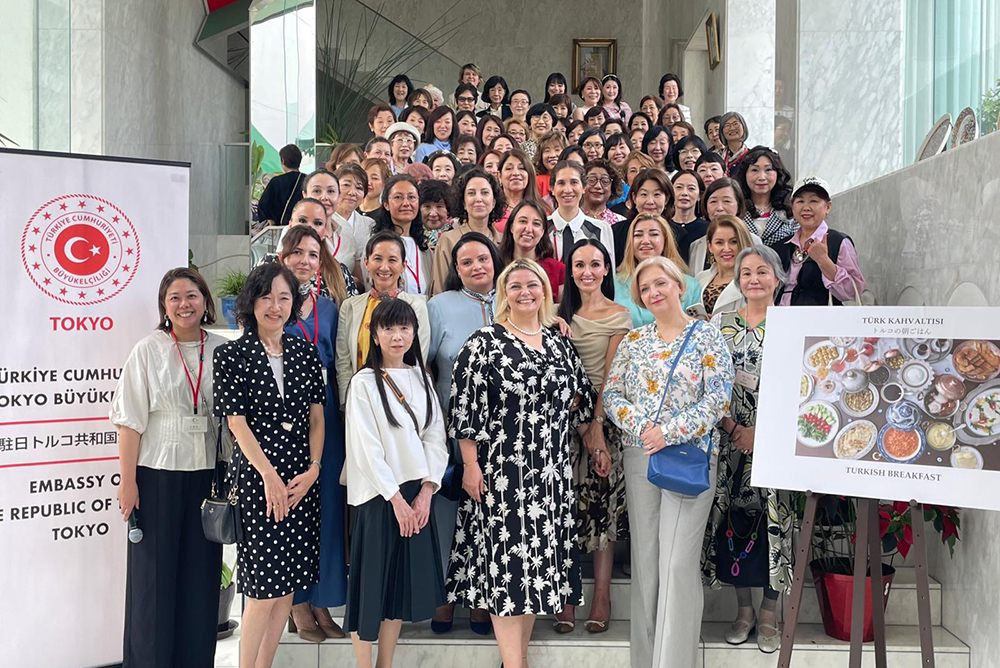
During your time in Japan, have you discovered any Japanese foods, regions or cultural traditions that have particularly impressed or surprised you?
So many! Where to start?
I truly enjoy discovering regional Japanese cuisine. Before living here, I had an idea of sushi, ramen and some of the well-known Japanese dishes, but I didn’t expect just how different the taste could be from one region to another. For example, ramen of Hokkaido and Wakayama, fugu of Shimonoseki, apples of Aomori, okonomiyaki of Hiroshima is astounding and delicious, not to mention ice-cream made of Hokkaido milk.
I am also surprised by how beautifully seasonality is reflected in Japanese food. Even small details—a seasonal ingredient, a particular sweet or the way a dish is presented—can remind you of the time of year. I find this very elegant and meaningful.
What continues to impress me is the attention to detail in Japanese culinary experiences. Even a very simple dish is prepared and presented with extraordinary care.
Indeed, what impresses me most is the dedication of the Japanese people in preserving traditions while searching for new, innovative ways in every walk of life at the same time. You can see this not only in food, but throughout Japanese culture. Living here has made me appreciate how tradition can remain alive without becoming stuck in the past.
These observations remind me of experiences one can have throughout Türkiye. You may visit a Turkish town because of its history or landscape, then discover that a local dish, a market or a conversation with local people becomes the recollection you cherish and take back home. These encounters help us understand a region better through its people and food.
For me, this is one of the most rewarding aspects of being in Japan. It also makes me eager to encourage more Japanese people to explore Türkiye beyond the best-known sights. The two nations share a similar sense of pride in local traditions and the same satisfaction in welcoming a guest.
Finally, if you were to recommend a journey to Türkiye for the readers of delicious Japan—one that combines food, culture and memorable experiences—what would you suggest, and what message would you like to give to Japanese people considering their next visit to Türkiye?
I would encourage Japanese travelers to leave room for the unexpected on their trips to Turkiye. Plan to see the places that have long been on your list, for sure, but also accept an invitation to taste something unfamiliar, ask about a local tradition and take the slower road when you can. Have breakfast with local people. Drink tea that is served without you asking for it. Try the food of which you cannot pronounce its name. Visit a bazaar and chat with people.
The most memorable discovery may be a conversation over tea or a dish you had never planned to try.
In Türkiye, we are always happy to welcome Japanese guests. We want you to enjoy our food, landscapes and heritage, but we also want you to feel the warmth of the people who call these lands home.
I think Japanese visitors would also discover something very special that I discover here in Japan almost every day.
Even though Türkiye and Japan are geographically far apart, there are nice similarities in the way we value food, tradition, hospitality and spending time together. So, perhaps that is the best reason to visit Türkiye — not only to see a friendly country, but to experience its diverse culture and rich history.
I hope Japanese readers would come to Turkiye with curiosity and depart with memorable stories and friendships that will bring you back to Turkiye again.
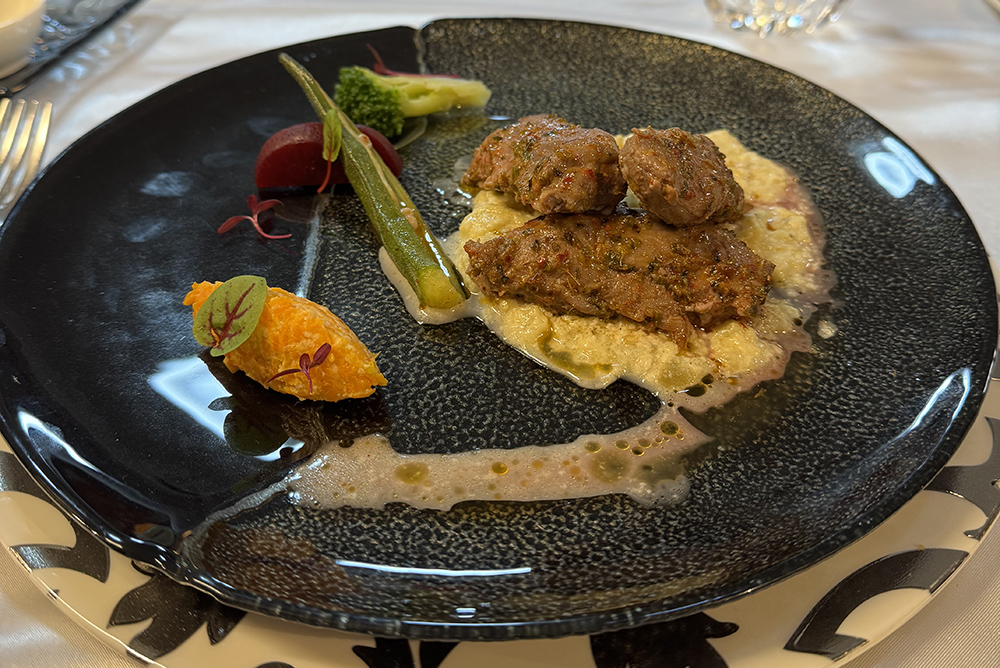
Ottoman Palace Cuisine at Burgaz Ada
Chef Mehmet Dikmen brings a rich culinary heritage to the table in Tokyo Through Food and Travel
Savory meat, gentle fruit sweetness, and the fragrance of herbs and spices come together in Ottoman palace cuisine. Its dishes reflect generations of culinary refinement and a thoughtful concern for the people who eat them. At Burgaz Ada in Tokyo’s Azabu-Juban neighborhood, owner-chef Mehmet Dikmen and his wife Hiroko, who runs the restaurant alongside him, shared the story behind their food. Drawing on historical recipes and years of working with Japanese ingredients, Dikmen creates dishes that express both his respect for the past and the couple’s wish to bring happiness to their guests.
A Culinary Journey That Began in the Forest
Dikmen first discovered the pleasure of cooking through the Boy Scouts, which he joined at around seven. Camping in the forest and preparing meals with his instructors and fellow scouts awakened an interest that would eventually shape his life. Although he studied economics at university, his heart drew him toward the kitchen. He began his professional career at a five-star hotel in Istanbul and, through his father’s connections, had the opportunity to study under a mentor with extensive knowledge of palace cuisine.
Later, working abroad deepened his appreciation of his country’s food. He wanted to explore the palace traditions that helped shape Turkish cuisine and develop a fuller understanding of their techniques. That ambition continues to guide his cooking. Eggplant and pilaf alone offer countless possibilities, with the same ingredients yielding remarkably different flavors. Sharing this diversity is one reason he remains devoted to the cuisine.
Its appeal extends beyond luxurious ingredients. Equally important is consideration for the diner’s well-being. Dikmen explains that physicians and cooks were involved in planning the sultan’s meals, carefully considering combinations of ingredients, spices, and herbs. Culinary traditions from across the empire came together at court, where they were refined over generations. That accumulated knowledge lives on in ingredient preparation and layered flavors. Paired with meat, dried apricots, figs, and almonds bring a subtle sweetness that rounds out the dish's savory richness.
Bringing Turkish “Wholesome Flavor” to Japanese Ingredients
To connect this history with the present, Dikmen consults old recipes as well as records of ingredients purchased for palace kitchens. When a historical dish tastes as good as it does, he leaves it unchanged. When adjustments are needed for contemporary palates, he draws on his experience and judgment. What he seeks to preserve is the deeply satisfying flavor of traditional cooking: the immediate pleasure of the first mouthful.
One of his greatest challenges in Japan was the taste of vegetables. “Japanese vegetables taste of water; Turkish vegetables taste of the earth,” he says. How could he recreate the depth of flavor he remembered from Türkiye with ingredients available in Japan? He experimented repeatedly, finding ways to build flavor with vegetable stock and other techniques. During his years in Nagano, he conducted trials almost daily for about a decade. His research continues today.
“I don’t want to change the flavors just to suit Japanese tastes. I want to bring out the Turkish flavors I find delicious. I believe delicious food has no borders.” He uses extra virgin olive oil throughout his cooking, including for frying. Every decision, from ingredient selection to preparation, contributes to the outcome. Sometimes an experiment leads him back to an earlier method. Even so, he wants today’s food to be better than it was a month ago, and next month’s to be better still. He describes the process as climbing a staircase, “one millimeter each day.”

Discovering a Food Culture Through Meze and Lamb
If you are visiting Burgaz Ada for the first time, start with meze, the traditional Turkish appetizers. In Türkiye, people gather around a variety of meze, enjoying bread, wine, and conversation. At Burgaz Ada, small portions of different meze are served together on a single plate, offering a taste of Turkish food culture.
Lamb offers another entry point into this culinary world. Dikmen carefully selects the quality and cuts of meat, then prepares them to achieve refined flavor. He has spent years developing marinades that soften lamb’s stronger aromas while preserving its savory character. Drawing on palace techniques and his own experiments, he can now achieve results close to his desired outcome with a marinade of about ten minutes.
“Cooking is a live performance,” he says. Brief preparation helps preserve the meat’s fresh flavor before it is cooked until tender and juicy and finished with fragrant herbs. His wife, who is not usually fond of lamb, laughs as she adds, “But I can eat his lamb dishes.” Even after decades of experience, there are always discoveries to be made. For Dikmen, the kitchen remains a place of daily learning.
When Recep Tayyip Erdoğan visited, the main course was Padişah Beğendi. Associated with the sultans’ enjoyment of the dish, it pairs lamb with a beğendi sauce made from roasted eggplant and cheese. Dikmen marinated and grilled lamb fillets and bone-in lamb chops, then served them with the sauce. The dish was conceived to convey the history of palace cuisine and to allow his guest to enjoy carefully selected meat at its best.
From the Restaurant to the Family Table
In Japan, Turkish food is often associated with kebabs. Yet kebabs alone encompass a wide range of ingredients and cooking methods, and the broader cuisine offers an abundance of vegetables, seafood, dairy products, rice and fruit. Through their dishes, the couple hopes to introduce guests to a food culture shaped by migration, trade and encounters among different peoples.
That ambition has also extended beyond the restaurant. During the pandemic, after obtaining the necessary permits, they began vacuum-packing dishes prepared in their kitchen and shipping them nationwide. The selection included soups, vegetable dishes, and desserts. Meat arrived already prepared, with instructions for cooking it at home. Dikmen’s wife and daughter handled packing and dispatch, fulfilling orders from Hokkaido to Okinawa.
Eventually, some recipients came to the restaurant and said, “We’ve actually been enjoying your food through your delivery service.” A meal at home had become the start of a relationship with the restaurant. The couple hopes to continue sharing Turkish cuisine by dining at Burgaz Ada and by enjoying dishes around the family table.
The Smiles That Make It Worthwhile
For regular guests, Dikmen keeps a record of dishes he's served so he can offer something new whenever possible. The restaurant’s small size allows the couple to give each person’s meal close attention. Beyond the study of history and the refinement of technique, what matters most is the expression on a guest’s face at the end of the evening.
“People come here looking forward to their meal, and I want to honor that feeling right up until they leave. I want them to go home even happier than when they arrived.” For Dikmen, the pleasure of cooking makes the hard work worthwhile. A guest’s “That was delicious” or “Thank you” gives him the energy to start the next dish.
“Those are my savings,” he says. “You can’t see them, but I have a great many.” On Burgaz Ada, knowledge passed down from palace kitchens is a source of pleasure for people today. Each meal offers a broader view of Turkish cuisine while conveying the warmth of its culture and the people behind it. With his guests’ smiles in mind, Dikmen returns to the kitchen each day, striving to make every dish a little better.
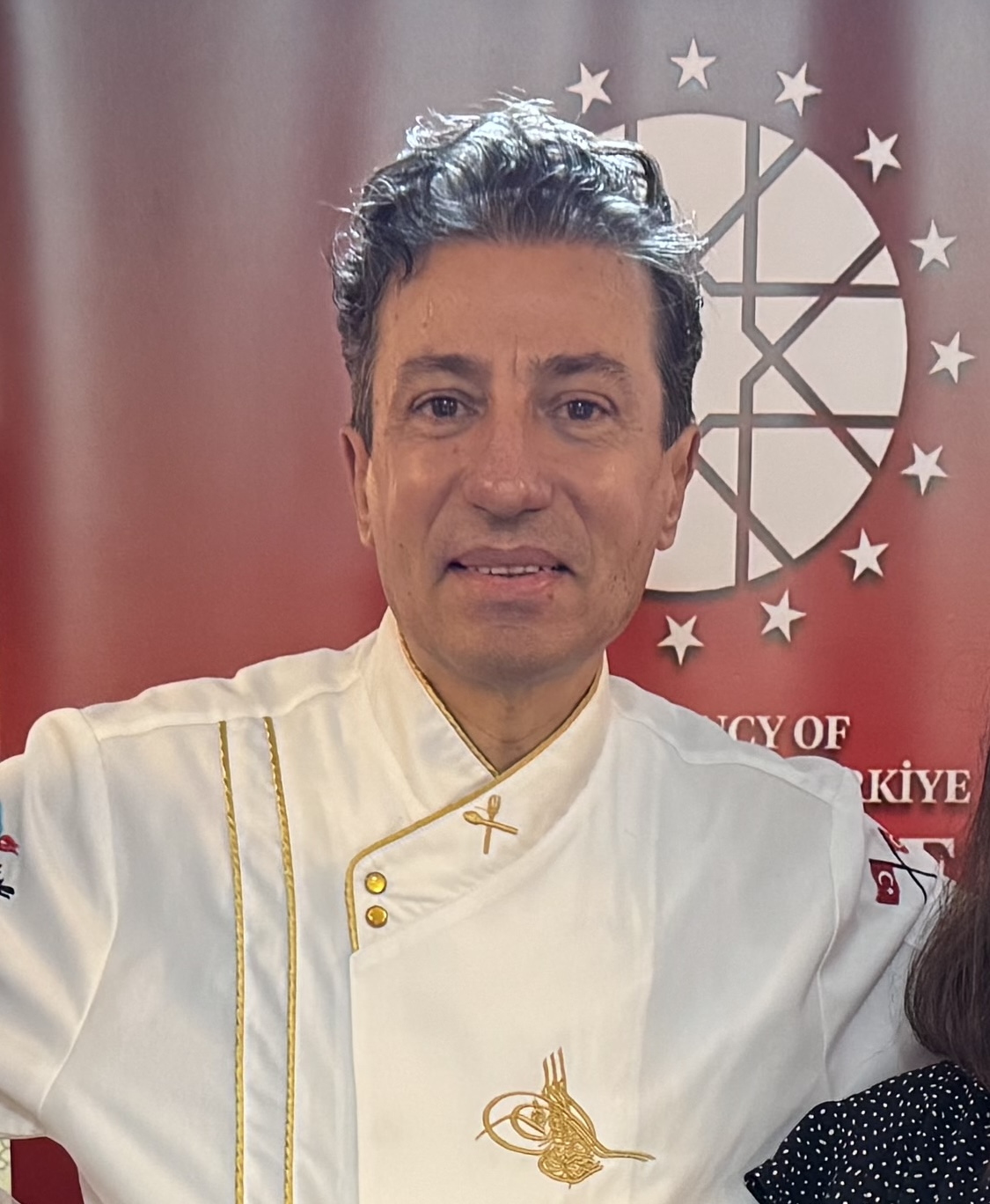
Mehmet Dikmen, Owner-Chef
Born in Istanbul in 1963, Mehmet Dikmen began his professional culinary career in 1986. After working at Istanbul’s Pera Palace Hotel and Tarabya Hotel, he gained further experience in Germany, the Netherlands, France, and Greece while studying Ottoman palace cuisine. He moved to Japan in 1997 and opened Burgaz Ada in Iida, Nagano Prefecture, in 1998, relocating the restaurant to Azabu-Juban, Tokyo, in 2008. Burgaz Ada received high ratings in the 2011 Zagat Survey for Tokyo. Its guests have included Recep Tayyip Erdoğan, who visited in 2014 while serving as prime minister of Türkiye. Burgaz Ada has been widely featured in both Japanese and Turkish media.