Understanding Japan Through ONSEN Culture
Hiroyasu Kumakura on the culture within an everyday bathtradition, memory, and hospitality are shared through cuisine
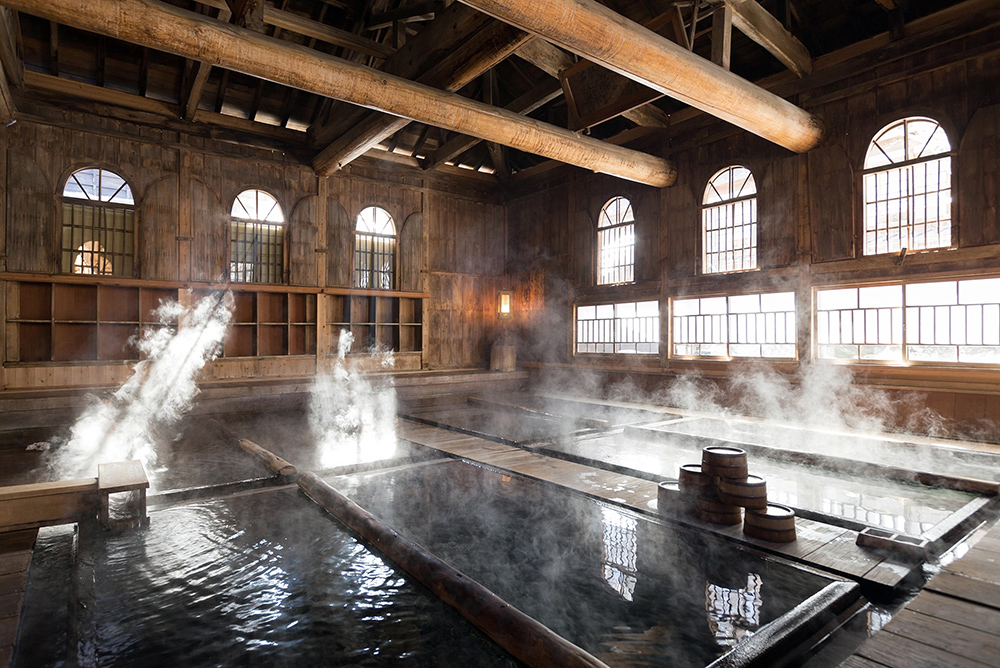
Washing before entering the bath. Sharing the water with people you have never met. What cultural meanings lie within bathing practices that feel entirely ordinary to Japanese people? Hiroyasu Kumakura, author of Nihon no ONSEN Bunka: UNESCO Mukei Bunka Isan e no Michi (Japan’s ONSEN Culture: The Road to UNESCO Intangible Cultural Heritage), discusses the value of ONSEN as a social practice rooted in everyday life, and how that culture can be passed on to future generations.
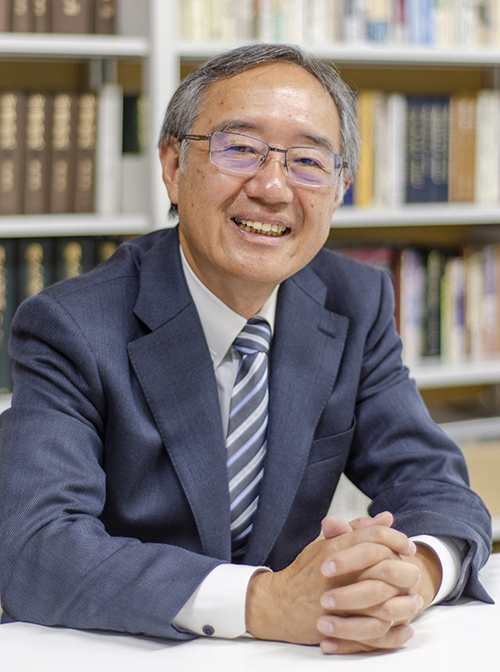 Hiroyasu Kumakura
Specially Appointed Professor, Takasaki University of Commerce
Representative Director, Japan Cultural Heritage Regional Cooperative Association
Author, editor, and co-author of numerous books.
What does it mean to understand ONSEN culture as a social practice?
ONSEN are so familiar to Japanese people that I think we have not given enough thought to bathing in hot springs as a culture in its own right. When discussing ONSEN culture, we tend to focus on food, shrines or unusual bathing methods. Yet these can each be explained in terms of food culture or religious belief. Those elements alone do not reveal the underlying question: why do ONSEN hold this particular place in Japanese life?
Japan has many volcanoes and abundant rain and snow. Water seeps underground and is warmed by the earth’s heat. Hot springs symbolize Japan’s good fortune in having both “water and fire.” But these are conditions provided by nature. What matters is how people have incorporated those gifts into their lives. Hot springs are found throughout the country, and people have continued to bathe in them as an ordinary part of life over many generations. I want to understand that whole practice as a culture underlying Japanese society. UNESCO’s concept of “social practices” is important here because dividing this activity into separate elements cannot fully explain it.
This culture is also carried on in the home. Japanese bathrooms have deep tubs and a separate area for washing. You wash your body first, then soak in the hot water. I see this as bringing the bathing culture of ONSEN into the home. Other countries have hot springs, but they are not used in the same way. In Karlovy Vary in the Czech Republic, when I said I wanted to bathe, someone asked whether I was ill. The use I encountered there centered on drinking the spring water, while bathing was associated with treatment. What seems ordinary to us is not necessarily ordinary elsewhere. Reconsidering that is part of the purpose of seeking UNESCO inscription.
Over this long history, what has changed, and what has remained the same?
The essentials have been passed down: removing one’s clothes, cleansing the body, and warming oneself in the same water as people one does not know. In the bathing etiquette preserved at ONSENji Temple in Kinosaki ONSEN, bathers pour water over their heads with a ladle and rinse their mouths before entering the bath quietly. The ladle itself, however, must not be put into the bathwater. The idea is to avoid defiling the sacred water.
What has changed is where people go, how often they visit and how long they stay. In earlier times, people from nearby communities gathered not only to bathe, but also to socialize and enjoy feasts. As travel became more widespread in the Edo period, people began making relatively long stays at hot springs farther from home. With improved transportation, people could visit ONSEN across Japan more often, but their stays became shorter.
Toji, the practice of staying at hot springs to recuperate, traditionally counts stays in weeklong cycles: hitomeguri (one cycle) and futameguri (two). You travel to a place blessed by nature and spend time there at an unhurried pace. Perhaps we have somewhat forgotten the richness of that time. Today, carefully managed baths and excellent meals can make even a short visit satisfying. Still, I think we could slow down a little, without packing the experience so tightly. Practical constraints, including cost, exist, but toji culture offers a way to reconsider the value of time spent in a place.
Beyond the spring water and scenery, what would you like visitors to notice in an ONSEN town?
I would like them to notice how local people prepare the water for bathing and make it available. The volume and temperature matter, as do the water’s mineral composition and properties. Even excellent spring water cannot serve many people if there is too little of it, and water that is too hot cannot be used as it is. Culture is expressed in the ways people respond to those conditions.
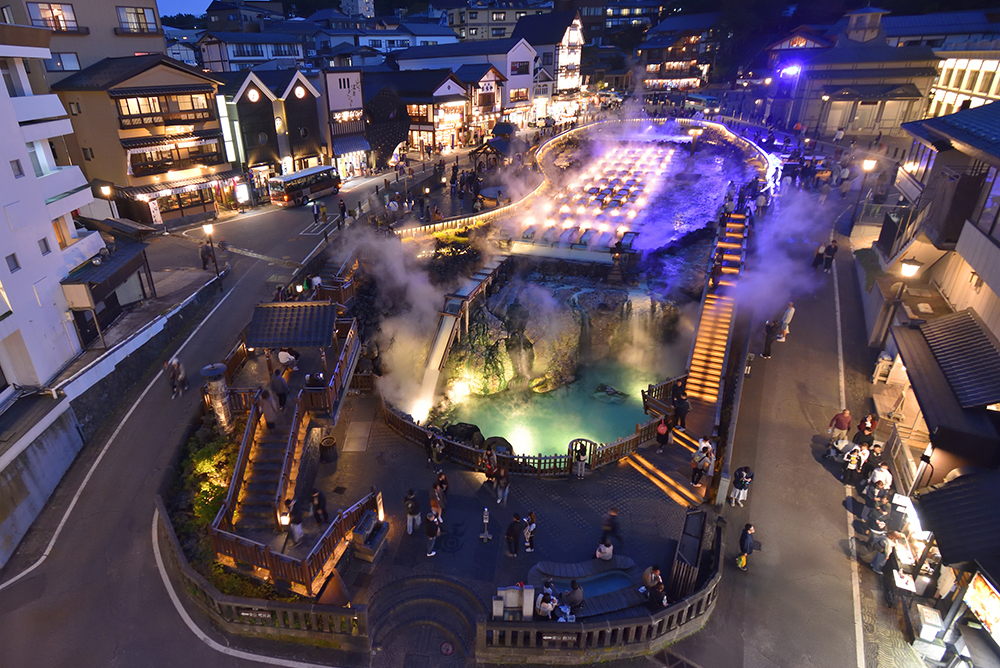
The Yubatake in Kusatsu is quite literally a “field of hot water.” People collect hot water, cool it through contact with the air, and distribute it to individual establishments, while mineral deposits known as yunohana, or “hot spring flowers,” form. It is a system for tending nature’s spring water and delivering it so that everyone can use it.
Kinosaki’s sotoyu, or public bathhouses, and Kurokawa’s nyuto tegata, a pass allowing visitors to use baths at different inns, also show how communities organize access to their hot springs. Individual inns have different circumstances, and shared systems help them complement one another. Hot springs are treated as a common resource, used collectively and distributed among the community. That is where local ONSEN culture lies. Rather than simply admiring a famous view, I would like visitors to sense why it took that form and whose work shaped it. I think that changes how you see an ONSEN town.
What matters most in passing this culture on to the future?
Gratitude for nature’s gifts, and gratitude between people. Visitors travel to the places where hot springs are found and receive their benefits. Meanwhile, local people manage the water, prepare meals and welcome guests. At the heart of this relationship is a mutual appreciation: being grateful for the opportunity to bathe, and grateful that people have come to bathe. Beneath that lies gratitude for the hot springs themselves and for the local natural environment that produces them. I think that is essential. Economic viability is necessary, but we must not reduce this relationship to money and lose that fundamental gratitude.
My concern is that awareness of the work supporting this seemingly ordinary act of bathing is fading, and that we are losing the skilled people who do that work. Today, employees from other countries play a major role in sustaining ONSEN communities. Among those I have spoken with were people who wanted to learn about Japanese ryokan culture and hospitality, then return home to establish accommodation businesses expressing their own cultures. I was also moved by their efforts to communicate in their native languages, Japanese and English, finding ways to make themselves understood.
At the same time, I feel that more ryokan and hotel groups are now attracting and hiring university graduates. I would like young people to work in ONSEN communities and take on new challenges. Culture is passed on by the people who work there.
What would you like to say to overseas readers visiting an ONSEN for the first time?
Please do try it, but only within your own comfort limits. To make that possible, preparation by the hosts is important. We tend to focus on undressing or bathing with strangers, but water temperature can also be a barrier. Water that feels comfortable to Japanese bathers may be too hot for someone unaccustomed to it. Hosts need to consider temperature and offer choices in how guests experience bathing, such as private bathing facilities attached to guest rooms.
Sharing a bath with strangers does not mean you have to talk to them. You can simply think of it as sharing a space, much as you would with other passengers on a train. We should aim for experiences that foster cultural understanding and welcome more visitors. For that to happen, we in Japan also need to understand how ONSEN have been maintained and how they have become rooted in everyday life. I believe looking afresh at the baths we take for granted is the first step toward welcoming people from around the world.
Kusatsu Onsen
A Town Built Around Its Hot Springs
In the mountains of northwestern Gunma Prefecture, Kusatsu welcomes visitors with rising steam, a hint of sulfur, and rushing water. At its heart lies the Yubatake, where hot spring water travels through long wooden channels before cascading below. More than a landmark, it is a working part of the town, revealing how generations have learned to live with their springs.
The Yubatake and an Abundance of Spring Water
Meaning “hot water field,” the Yubatake serves two practical purposes. Its wooden channels cool the naturally hot water through contact with the mountain air and collect yunohana, the mineral deposits left behind. Watching the water flow helps visitors understand the springs before they step into a bath.
Kusatsu’s abundance is central to its appeal: more than 32,300 liters of hot spring water emerge naturally every minute. This supply supports gensen kakenagashi bathing at many inns and bathhouses, with fresh spring water continuously flowing into the baths rather than being recirculated. The water’s strong acidity is another distinctive feature, reflecting the volcanic forces that shape this mountain destination.
Yumomi: Cooling the Water Without Dilution
Equally characteristic is yumomi, the traditional practice of stirring hot spring water with large wooden boards. The springs emerge too hot for bathing, but adding cold water would dilute their mineral content. Yumomi offered an ingenious solution, lowering the temperature without dilution. At Netsunoyu, beside the Yubatake, visitors can watch the practice performed to traditional Kusatsu folk songs. Rising steam, rhythmic movements, and the sound of boards striking water bring this practical bathing tradition to life.
A Long Tradition of Bathing and Rest
Kusatsu has long welcomed visitors for toji, the Japanese practice of staying at hot springs to bathe and rest over time. During the Meiji era, German physician Erwin von Bälz took an interest in its springs and highland environment, helping introduce their appeal overseas. That history adds depth to a visit today, connecting the pleasures of bathing with a longstanding culture of rest.
Begin by strolling around the Yubatake, following the water through its channels. Watch a yumomi performance, pause at a nearby footbath, then enjoy a bath at your accommodation. For visitors seeking a break from Tokyo, Kusatsu offers a mountain escape where discovery and relaxation come together. The experience reaches beyond the bath itself: the town’s streets, songs, and customs reveal a community shaped by its abundant springs. Seeing how the water is cooled and used makes bathing feel more connected to the place, its people, and the mountains around it.
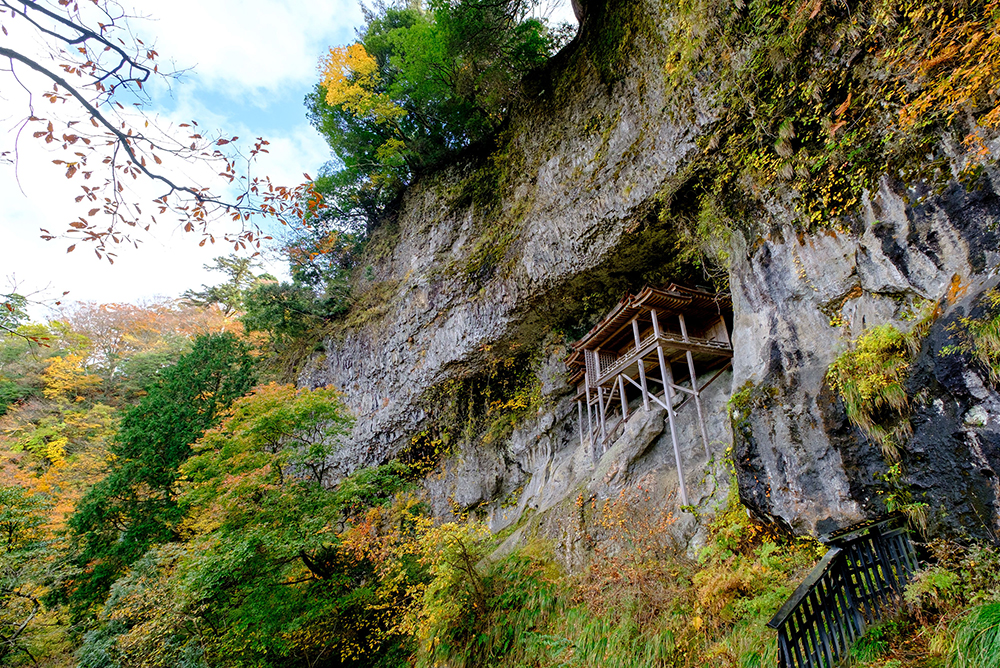
Misasa Onsen
Renewal in the Mountains, Rest in the Springs
In central Tottori Prefecture, traditional inns and communal bathhouses line the Misasa River. Cross a bridge to the sound of flowing water, then wander through streets touched by rising steam. In Misasa, the walks before and after a bath are part of the pleasure, inviting you to slow down and discover the town at your own pace.
A White Wolf and a Hot Spring
Misasa’s origins are told through the legend of a white wolf, dating back some 850 years. On his way to Mount Mitoku, a warrior named Okubo Samanosuke spared a white wolf’s life. That night, the Buddhist deity Myoken appeared in his dream and, in gratitude, revealed the location of a hot spring.
Water still rises at Kabuyu, traditionally regarded as the birthplace of Misasa Onsen. The story endures as a local legend rather than a verified historical account, reflecting the affection generations have shown for these springs. Knowing it adds another layer to a visit: the water becomes part of a story passed down through the centuries.
Distinctive Water, Time to Unwind
Misasa’s springs are known for their high content of naturally occurring radon, a radioactive element. Their health benefits have long attracted interest. For visitors, the immediate appeal is the simple pleasure of soaking in warm water, resting, and spending unhurried time beside the river.
This is a place to experience toji, Japan’s tradition of staying at hot springs to bathe and recuperate over time. Even a shorter visit offers a chance to settle into a gentler rhythm, with a bath and a riverside stroll shaping the day.
A Sacred Mountain and a Culture of Bathing
Misasa’s distinctive character also comes from its connection with nearby Mount Mitoku. The steep pilgrimage route to Nageiredo Hall, part of Sanbutsuji Temple, was once a place where practitioners of shugendo, Japan’s mountain ascetic tradition, trained body and mind.
The local story links purification of the “six roots of perception” on the mountain with soothing the “six senses” in the hot springs. Japan Heritage recognized this relationship between sacred landscape and bathing culture in 2015.
You need not make the demanding climb to Nageiredo to appreciate that connection. Learning about the mountain’s spiritual traditions before returning to the onsen town may give your next bath a different meaning.
Where Kusatsu makes the power of its springs visible at the center of town, Misasa quietly brings together mountain devotion and riverside bathing traditions. Discover the stories of the place, then step into its waters. The journey becomes richer for knowing what surrounds you.

Shin-Tamagawa Onsen
A Forest Retreat in Akita
Nestled in Towada-Hachimantai National Park, surrounded by mountains and beech forests, Shin-Tamagawa Onsen in Semboku, Akita, offers a comfortable introduction to Japan’s hot spring culture. Drawing from the same source as Tamagawa Onsen, a destination long associated with toji—extended stays centered on bathing and rest—the resort combines distinctive waters with a choice of guest rooms and bathing facilities. For international travelers, it is an inviting place to slow down and experience this tradition.
Discover the Waters at Your Own Pace
The spring’s defining feature is its highly acidic water, with a pH of approximately 1.2 and hydrochloric acid as a principal component. In the main bathing hall, built with Aomori hiba cypress, baths offer different temperatures and concentrations of spring water. An outdoor bath brings the fresh forest air into the experience, while quiet moments afterward invite guests to settle into the slower rhythm of the mountains.
Because the water can be strongly stimulating, guests should follow the facility’s bathing guidance and adjust their bathing to how they feel. Private baths are also available to overnight guests and can be reserved after arrival.
Bedrock Bathing and Comfortable Rooms
Bedrock bathing offers another way to experience Tamagawa’s geothermal warmth. Overnight guests can enjoy an indoor version regardless of the season or weather.
Handrails and efforts to minimize changes in floor level make the property easier to navigate. Accommodation ranges from Western-style rooms to tatami rooms furnished with beds, allowing guests to choose a setting that suits them. Wi-Fi is available in guest rooms. Alternating between bathing and resting offers a simple way to bring the unhurried rhythm of toji into a holiday.
A Taste of Akita
Buffet meals introduce guests to regional cooking and seasonal ingredients. Local specialties include kiritanpo nabe, a hot pot featuring grilled rice cylinders, and iburigakko, Akita’s smoked pickled radish.
A stay of several nights allows time to leave everyday demands behind. Through bathing, rest and food, guests discover a quieter side of Akita. At Shin-Tamagawa Onsen, the pleasure lies in settling into one place and giving yourself time to enjoy it.
IMPORTANT WINTER INFORMATION
Winter Access & Bus Timetable
Shin-Tamagawa Onsen will be closed for maintenance from November 30 to December 11. From December 1, Route 341 is closed to private vehicles for winter. Access is by scheduled bus from JR Tazawako Station, with only four departures daily: 8:15, 9:40, 11:15, and 12:35. The journey takes approximately 64 minutes on each bus service. Do not miss the last bus at 12:35. Taxis cannot reach the resort during the winter closure.

Arima Onsen
Two Distinctive Waters, Centuries of History
Head into the mountains from central Kobe, and the city gives way to Arima Onsen, nestled in a valley of the Rokko mountain range. Inns, small shops, temples, and shrines line its sloping streets. After a bath, wander along the narrow lanes, and you may find yourself slipping into a slower rhythm, far removed from the bustle of urban Kobe. Arima’s appeal lies in an intriguing combination: two remarkably different kinds of spring water and a history you can discover simply by walking through town.
Following in the Footsteps of Hideyoshi
Arima is one of Japan’s oldest hot spring destinations, with records of imperial visits dating to the seventh century. Over the centuries, its waters have drawn travelers from many walks of life.
Among its most devoted admirers was Toyotomi Hideyoshi, the sixteenth-century leader who helped unify Japan. He supported Arima’s recovery after earthquake damage and had bathing facilities built here. Excavated remains are now on display at the Taiko no Yudonokan museum.
For visitors unfamiliar with Japanese history, this offers a tangible point of connection. A powerful historical figure’s affection for the springs survives in the town itself, turning a walk through Arima into an encounter with the past.
Gold and Silver, Explained
Arima’s signature waters are known as kinsen, or “golden water,” and ginsen, or “silver water.” Their names invite curiosity, but the difference becomes clear when you see them. Rich in iron and salt, kinsen turns reddish-brown when exposed to air. Its distinctive color makes bathing a memorable visual experience. Ginsen, by contrast, is colorless and clear. The name includes Arima’s carbonated, radium-containing springs.
Within one compact town, visitors can encounter waters that differ in both appearance and composition, revealing something of the varied natural processes beneath the surface. The public bathhouses Kin no Yu and Gin no Yu offer accessible introductions to these contrasting bathing traditions.
A Town to Explore Between Baths
After soaking, take time to explore the slopes. Temples, shrines, and spring sources provide reasons to pause along the way. Even the local snacks have a connection with the water: tansan senbei, light, crisp crackers associated with Arima’s carbonated springs, are a characteristic town specialty.
For travelers spending time in Kobe, Arima adds another dimension to the journey. Its mountain setting, intimate streets, and distinctive baths invite an unhurried visit, with discoveries unfolding between one soak and the next.
Ancient records, Hideyoshi’s legacy, and waters still rising from below all meet here. In Arima, bathing and exploring the town’s history become parts of the same experience, giving every walk—and every bath—a little more meaning.
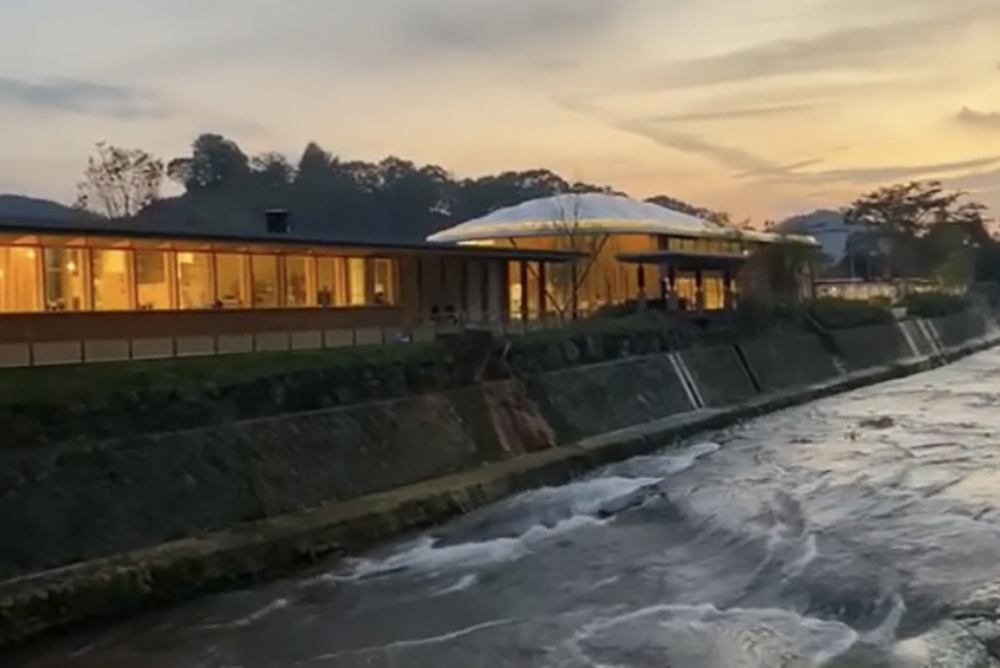
Nagayu Onsen
Gentle Bubbles and Riverside Calm
Along the Seri River in Taketa, Oita Prefecture, Nagayu Onsen invites visitors to settle into the quiet rhythm of a small hot spring town. Inns and communal bathhouses stand beside the water, and the sound of the river accompanies a leisurely walk. Bathing here feels closely connected to everyday life, a pleasure the community has cherished for generations. Nagayu is known for springs containing naturally occurring carbon dioxide. For visitors, their appeal can be wonderfully tangible: tiny bubbles gathering on the skin as you sit quietly in the water.
A Tradition Beyond the Bath
Nagayu’s bathing history reaches back to the Edo period. Alongside toji, the practice of staying at hot springs to bathe and rest over time, the town has maintained a tradition of insen, or drinking spring water at places where it is suitable for consumption.
Designated drinking fountains remain part of the town’s spring culture, revealing another way local people have incorporated the waters into their lives. If you wish to try insen, use only locations specifically marked for drinking and follow the instructions provided.
Discovering the Character of Each Spring
At Ramune Onsenkan, visitors can experience a carbonated spring where small bubbles cling to the body. The name recalls ramune, Japan’s familiar fizzy soft drink, offering a playful introduction to this distinctive bathing experience.
Gozenyu, one of the town’s landmarks, offers a different atmosphere, with the Seri River's sound accompanying your soak. Water temperatures and settings vary between facilities, making Nagayu a rewarding place to explore at an unhurried pace.
Rather than squeezing a single bath into a busy itinerary, allow time to discover these differences. A walk between baths becomes part of the experience, giving you a chance to enjoy the riverside setting before returning to the water.
A Connection with Germany’s Spa Culture
Nagayu’s local traditions also have an international dimension. In 1989, a delegation visited the German spa town of Bad Krozingen to learn about the use of carbonated springs. Exchanges between the two communities have continued since, and that relationship finds expression in Gozenyu’s architecture.
This connection adds an unexpected layer to a visit. A small Japanese onsen town has looked overseas for ideas while continuing to nurture its own bathing culture, bringing different approaches to spending time at the springs into conversation.
Nagayu’s charm lies in both its distinctive water and the gentle pace of life around it. Feel the bubbles, listen to the river, wander through town, and return for another bath. Give this small place time, and its pleasures gradually reveal themselves.
 Sunset at historic Shirahama Onsen
Beyond Wellness: Japanese Onsen and Their Growing Global Significance
Onsen and Sacred Mountains
Hot springs, nature’s gift from beneath the earth, have been used worldwide since antiquity. In Japan, tōji—restorative hot spring stays—developed during farming and fishing off-seasons. People left everyday life, ke, for the special realm of hare, renewing body and mind through bathing and companionship.
In Tohoku, tōji is linked to mountain worship. At Mount Yudono, one of the Three Sacred Mountains of Dewa, worship centers on a rock from which hot spring water flows. The ascent follows a sandō, or sacred approach; after ritual rebirth, the descent becomes another sandō, meaning “birth canal.”
At the mountain’s foot, participants pass through a burning straw hoop called donto, symbolizing childbirth and rebirth. At an inn, bathing and Buddhist vegetarian cuisine conclude the journey through shōjin-otoshi, marking the return from hare to ke.
Enduring hot spring customs include ubuyu, a newborn’s first bath, and yukan, the ritual washing of the deceased.
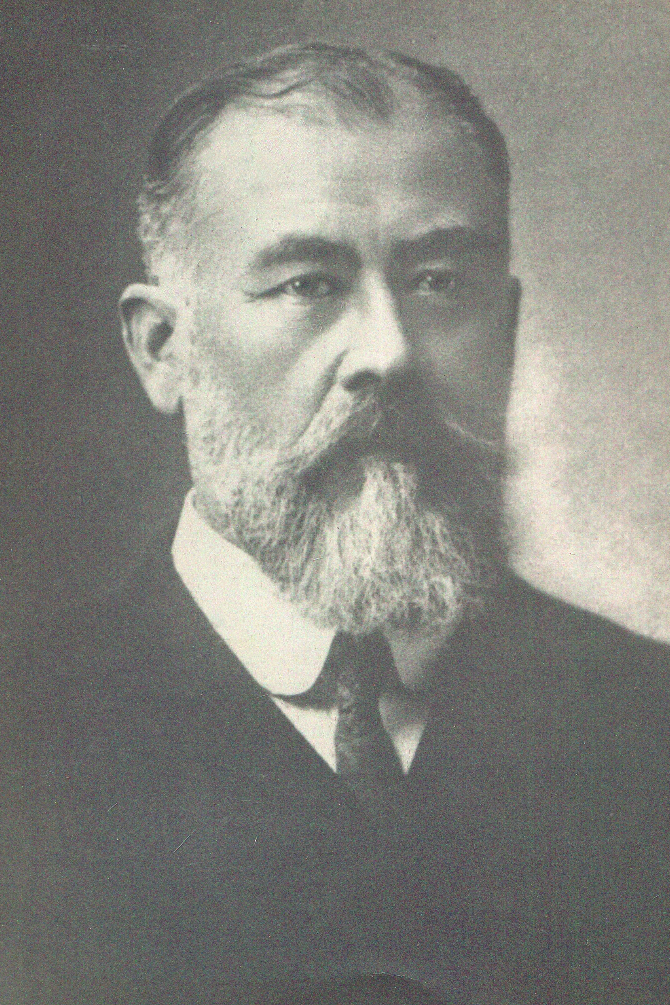 Collection of the Dr. Erwin von Baelz Memorial Hall
Onsen and Modern Medicine
1913), invited from Germany in 1876 to help modernize Meiji Japan, introduced Western medicine to onsen research.
While teaching at Tokyo Medical School and serving the imperial household, he visited springs nationwide. Differences in water composition and temperature from European springs inspired systematic research at Kusatsu, Arima, and elsewhere. A father of modern Japanese medicine, he wrote diaries and Nihon Kōsenron, a treatise on Japan’s mineral springs.
Successive professors in the University of Tokyo’s Department of Physical Therapy and Internal Medicine pursued comprehensive spa resorts combining bathing, climate therapy, and natural surroundings. However, beliefs in deities inhabiting mountains and seas hindered local research. Research shifted to waters’ medical effects, including Kusatsu’s strongly acidic springs and Misasa’s naturally radioactive springs.
The department’s third professor, Yoshio Oshima (1911–2005), became founding chairman of the Forum on Thermalism in Japan. Internationally recognized for research on acidic and radioactive springs, he also pioneered scientific studies of Japanese traditional therapies, including Kampo medicine.
Looking Ahead
In Europe’s leading spa countries, advances in drug treatment have coincided with reduced social insurance coverage for thermal treatments for rheumatic diseases and allergies. Spas are broadening their appeal from Kur, or medical treatment, toward health promotion and wellness. Yet thermal therapy’s medical standing has weakened, and fewer specialist physicians threaten its future.
Attention is turning to Japan’s onsen. For those experiencing urban stress and emotional exhaustion, bathing amid nature offers comfort. Evoking the womb’s embrace and life’s beginnings, it brings repose and reconnects us with biological time and the unhurried rhythms of growth.
This restorative potential interests medical researchers worldwide as a holistic complement to modern medicine’s focus on symptom management.
Responding to domestic and international needs, our Forum, now in its 40th year, continues to develop and communicate the global value of Japan’s hot spring heritage, guided by founding chairman Yoshio Oshima’s motto, “Thermalism for All.”
About the Author
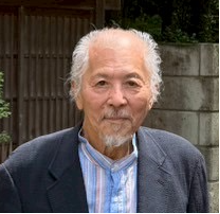
Sumito Goda
Born in 1949. Executive Board Member, Forum on Thermalism in Japan. A specialist in health sociology, he has authored or coauthored numerous books, including Thermalism in Japan (1988), 100 Notable Hot Springs of Japan (1990), A New Guide to Tōji (2009), A Guide to Radioactive Hot Spring Safety (2012), and The Onsen Handbook (2016).