Conrad Tokyo
There Is No Single Answer in Cuisine, Only the Pursuit of Value Through Constant Challenge
The Luxury of Dining as Experience, Envisioned by Masashi Mizuguchi, Executive Chef of Conrad Tokyo
A career in the culinary world was never part of a carefully drawn plan.
Originally aspiring to become a hotelier, Masashi Mizuguchi found himself guided, almost by chance, into the kitchen. Over the next 38 years, he gained experience at hotels in Japan and abroad, eventually becoming Executive Chef of Conrad Tokyo. At the core of his philosophy lies a consistent belief: there is no single correct answer in cooking. Beyond the boundaries of Japanese, French, or Chinese cuisine, what truly matters is how a dish is delivered as an experience. At the same time, it requires both the precision to ensure consistent quality regardless of who prepares it, and the flexibility to create dishes that exceed expectations. His perspective, which frames cuisine not as technique but as value, offers a sharp reflection of what defines luxury in today’s hospitality landscape.
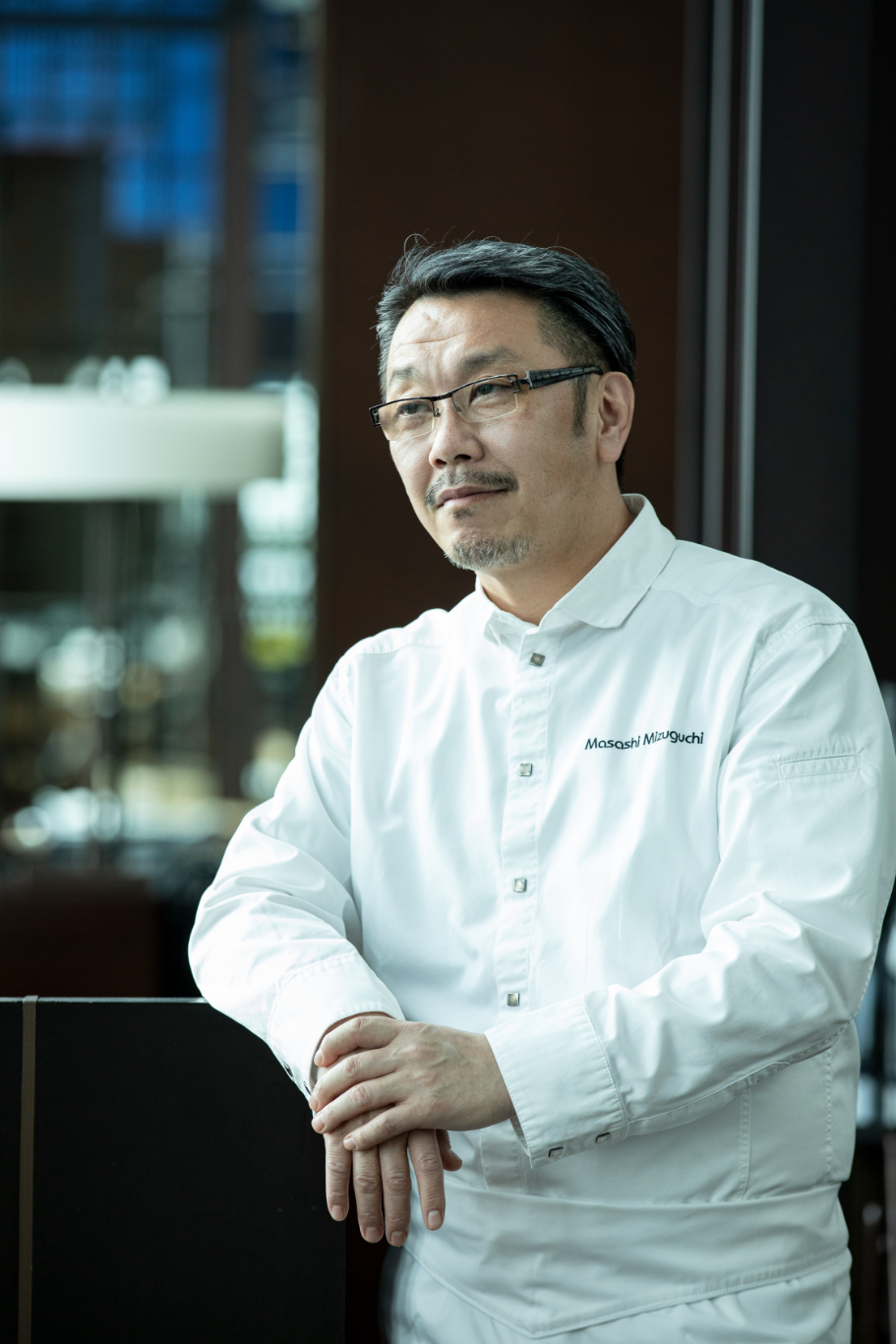 Masashi Mizuguchi
Executive Chef, Conrad Tokyo
I did not originally intend to become a chef. I entered the industry because I wanted to work in hotels. I had hoped for a role such as a bellman, but the director of human resources at the time suggested that I might be better suited to the kitchen, and that is how it began.
Once I started working in the kitchen, I gradually became fascinated by the craft. I did not attend culinary school, so everything I learned came through hands-on experience. Keen to develop my skills, I worked part-time at fish markets preparing fish from early mornings, and at other times in bakeries and restaurants to gain broader experience. Looking back, I feel fortunate to have encountered many inspiring people along the way. Those experiences have shaped who I am today.
At Conrad Tokyo, we offer a range of dining options including Japanese, Chinese, modern French, all-day dining, and bar. Rather than aligning them in a single direction, we place importance on creating distinct experiences in each venue.
We design our annual promotions as a whole, ensuring that every restaurant offers something different. Ideally, guests should have a completely different experience each time they visit. As we welcome many international guests, we are also prepared to accommodate diverse needs, including ramen, plant-based options, and halal-friendly menus.
My experience in Singapore continues to influence my approach. There, different culinary traditions come together in a single dish, creating a sense of collaboration. Italian cuisine with Asian nuances, or sushi with Chinese elements. It taught me that there is no absolute definition of what is right in cooking. Even when guests come for Japanese cuisine, incorporating elements from Western or Chinese traditions is acceptable, as long as it can still be expressed as Japanese.
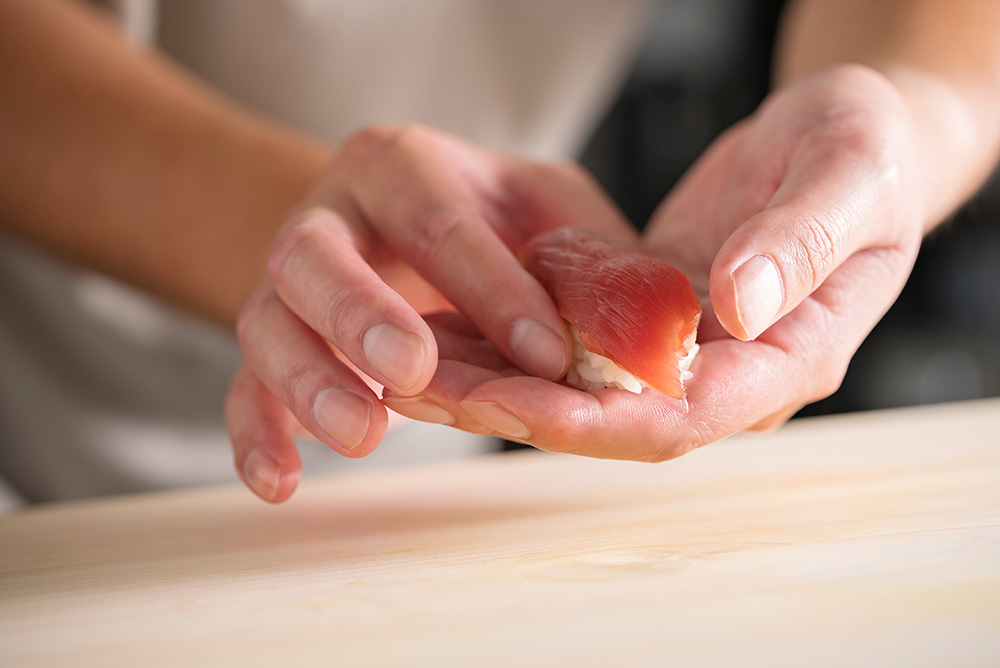
At our Japanese restaurant, our seasonal bento box, which features a variety of carefully selected ingredients, is particularly popular. It is also available through in-room dining. We also offer a distinctive course that combines sushi, teppanyaki, and kaiseki. At our Chinese restaurant, one of our specialties is China Blue Tokyo duck, a Peking duck served in a roll style with seasonally different wrapper.
Our French offering focuses on modern cuisine that incorporates Japanese ingredients and seasonings, such as dishes accented with shio koji or miso. In all-day dining, ramen made with premium ingredients such as duck, foie gras, and lobster, as well as vegan ramen and Japanese beef burgers, are especially popular. These dishes are highly appreciated by international guests.
Our standard menus are updated approximately every two months, while wedding menus are reviewed seasonally, four times a year. Each restaurant’s menu is primarily created by its head chef. However, for core operations such as all-day dining and in-room dining, I standardize recipes across the hotel.
The key principle is consistency. Every dish must taste the same, regardless of who prepares it. To achieve this, we carefully design each process and division of roles, and and base preparations are mainly carried out in a central kitchen from both hygiene and production management perspectives. Cuisine is not sustained by individual skill alone. It must be reproducible to truly function.
While I occasionally visit production sites myself, perhaps two or three times a year, what matters most is the network I have built throughout my career. From Hokkaido to Hokuriku and Okinawa, I work with trusted producers and suppliers I have known over the years. I rely on these relationships to source high-quality ingredients. To balance efficiency and quality, strong human connections are essential.
How do you address food diversity for international guests?Our basic principle is simple: never say no. Even when guests have dietary restrictions due to allergies or religious reasons, we always propose alternatives on the spot and ensure that we can provide something suitable. In fact, these unexpected requests are opportunities to exceed expectations. They allow us to create experiences that leave a stronger impression than standard offerings.
What does hospitality mean to you as an Executive Chef?To me, hospitality means exceeding expectations. Even something as simple as serving fruit can be transformed. Instead of merely cutting and presenting it, we can create surprise through presentation and storytelling. It is the accumulation of these small touches that defines true hospitality. The essence lies in transforming something simple into a meaningful experience.
What is your role and mission as Executive Chef?While I oversee the entire operation, I do not believe in making every decision myself. It is important to bring out the strength of each chef. If I intervene too much, everything becomes the same. My role is to set the direction, while making adjustments only where necessary. In a sense, I act as a coordinator. I also value working alongside younger staff in the kitchen. In today's environment, I feel leadership is build through collaboration. People are more likely to follow when you work with them closely and offer hands-on guidance. Maximizing each individual’s strengths and achieving the best performance as a team, that is my mission. Cuisine does not come to completion on the plate. It is an experience that continues to evolve, shaped by the relationships between people, and renewed again and again.
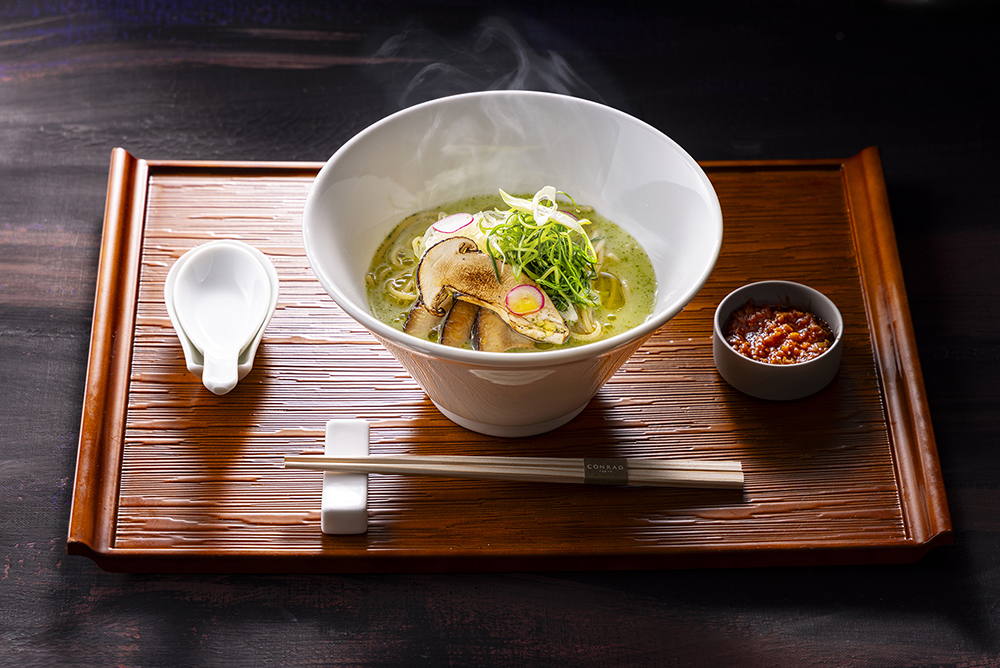 Original Vegan Ramen
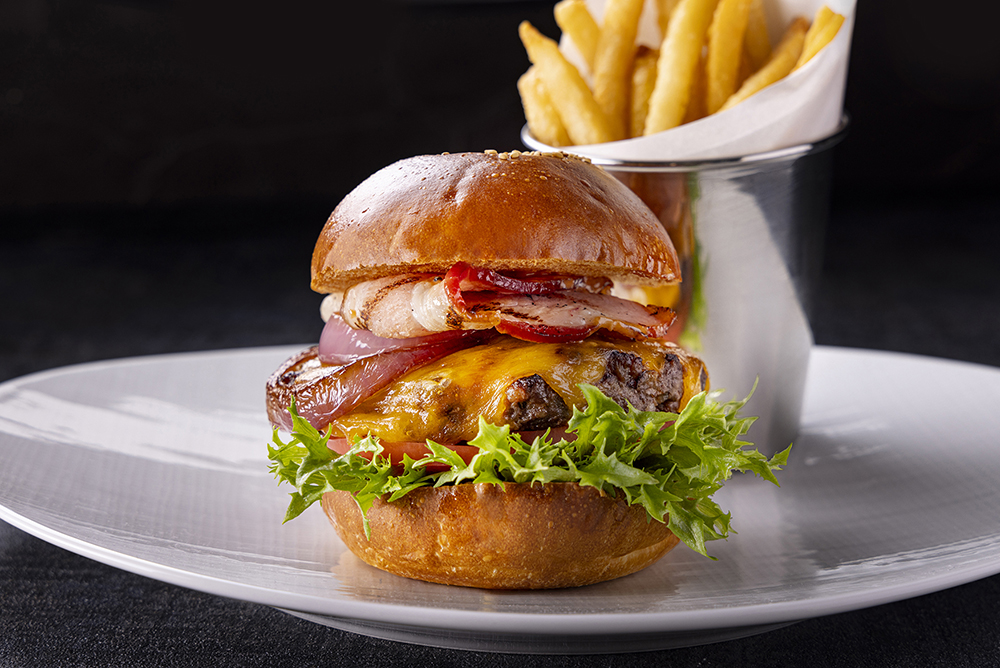 Beef Burger