Before Traveling to Ishikawa, Encounter Ishikawa in Tokyo
Just a few minutes on foot from Tokyo Station, a place where you can taste, sip, and explore, preparing yourself to experience Ishikawa more deeply before the journey even begins.
Introducing “Yaesu Ishikawa Terrace”
Crafts, treasures from the sea, and distinguished sake.
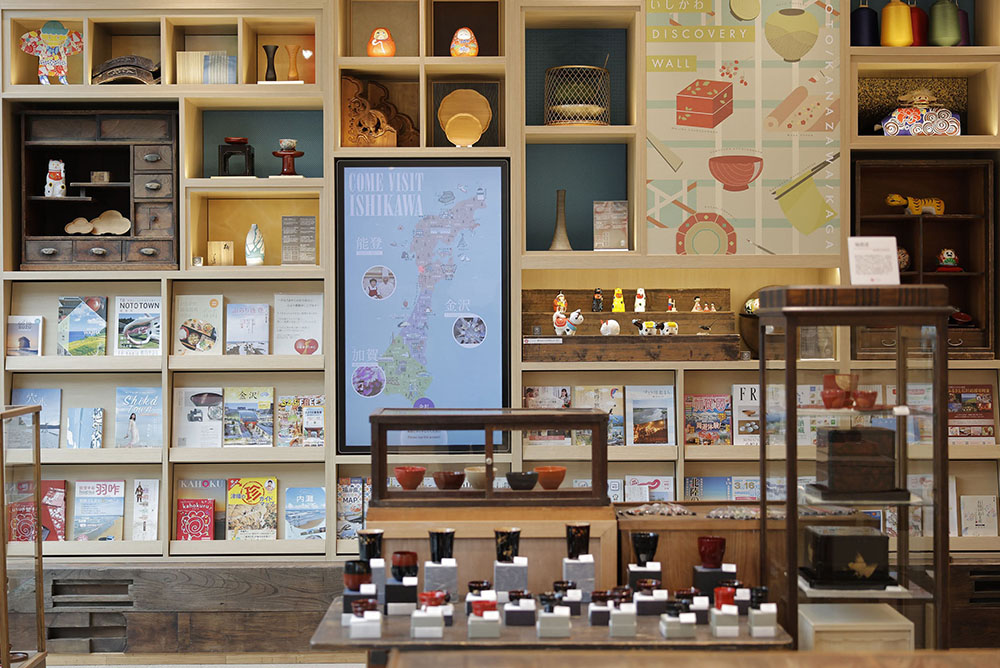
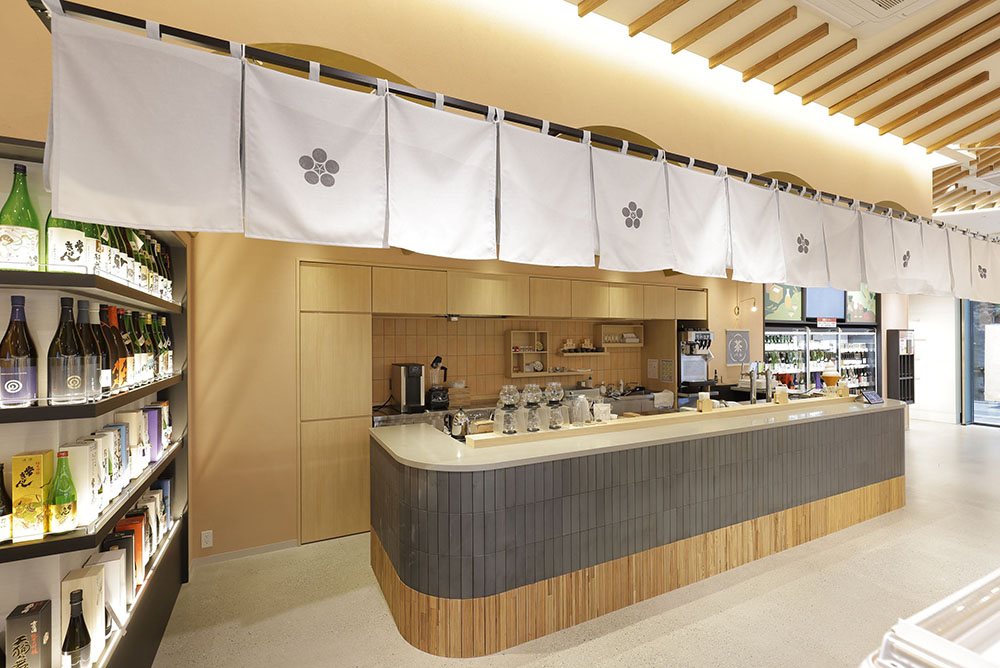
In the heart of Tokyo, there is a place where you can experience the essence of Ishikawa even before your journey begins. This is “Yaesu Ishikawa Terrace,” Ishikawa Prefecture’s official antenna shop. Far more than a simple souvenir store, it offers a multi-layered experience. Visitors can browse and shop while immersing themselves in the cultural atmosphere expressed through the interior design and spatial details. You can also consult about travel plans on the spot, allowing your vision of a trip to Ishikawa to take on vivid, concrete form.
It is, in every sense, a starting point for the journey.
At Yaesu Ishikawa Terrace, the space itself is designed using materials from Ishikawa Prefecture. The flooring incorporates Tomuro stone and sand from the Tedori River, while the walls are finished with diatomaceous earth. Looking up, visitors are greeted by a ceiling inspired by traditional Japanese umbrellas, crafted from cedar sourced in Ishikawa.
Ishikawa is known for its frequent rainfall, reflected in the saying, “Even if you forget your lunch box, never forget your umbrella.” Echoing this local wisdom, the umbrella motif is more than decorative. It expresses a spirit of hospitality, as if opening an umbrella to welcome each guest into the space.

Food: Tasting Ishikawa in Tokyo (Lineup as of March 2026)
At the in-store dining area “Cha-Bar,” visitors can enjoy seasonal flavors from Ishikawa, such as Kaga bo hojicha soft serve, with offerings that change throughout the year. (Menu items may vary depending on the season.)
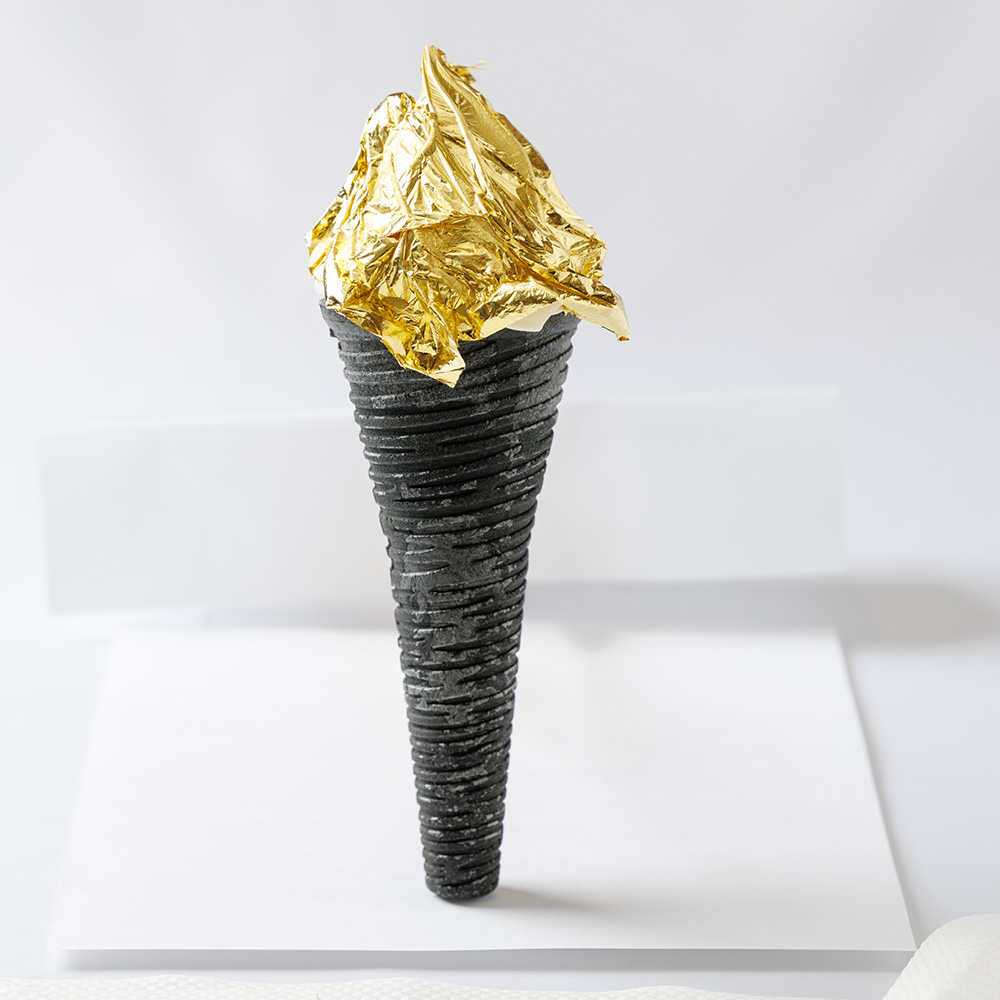
Gold Leaf Soft Serve
Soft serve adorned with delicate gold leaf is especially popular among international visitors. Visually striking and distinctly memorable, it offers both elegance and indulgence with every bite.
Kintsuba
One of Ishikawa’s signature traditional sweets. Even for those less familiar with red bean paste, it is well worth trying. Pair it with tea from Ishikawa, where the roasted, aromatic notes enhance the sweetness, creating a balanced, refined taste.
Other Sweets
Ankoro mochi, with a same-day shelf life, is available exclusively on weekends, offering a rare opportunity to enjoy it at its freshest.
Travel Tip
A visit to Ishikawa reveals a far wider range of exceptional local specialties that rarely reach Tokyo. Restaurants showcase these ingredients at their freshest, while traditional inns offer not only exquisite cuisine but also a deeply rooted sense of hospitality that completes the experience.
Sake: Discovering Ishikawa’s Finest Through Tasting
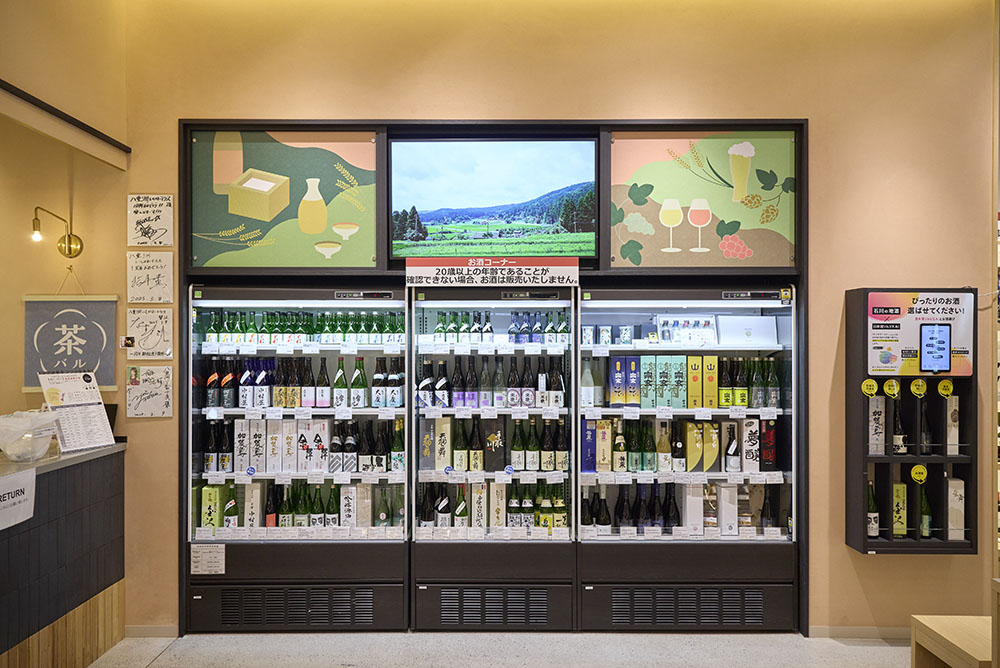
“Three-Sake Tasting Set” to Enjoy On Site
One of the most popular experiences is the three-sake tasting set, which can be enjoyed on the spot. Served at the in-store dining area “Cha-Bar,” it allows visitors to sample a curated selection and purchase their favorite bottles immediately afterward.
Interestingly, many international visitors choose sake over beer, and it is common to hear that a simple tasting leads to a newfound appreciation: “I tried it, and I loved it.”
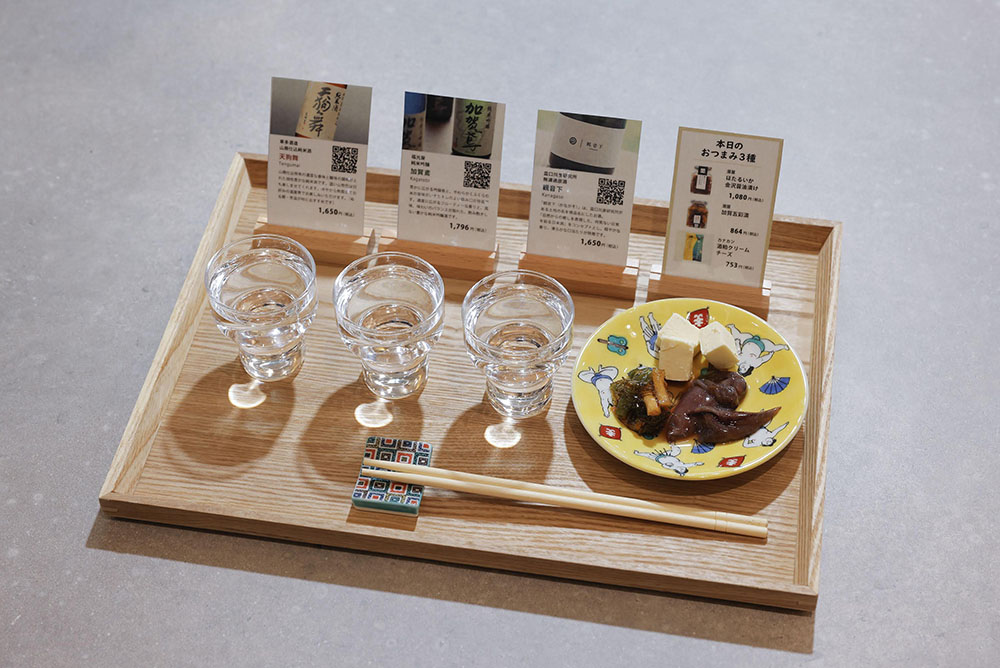
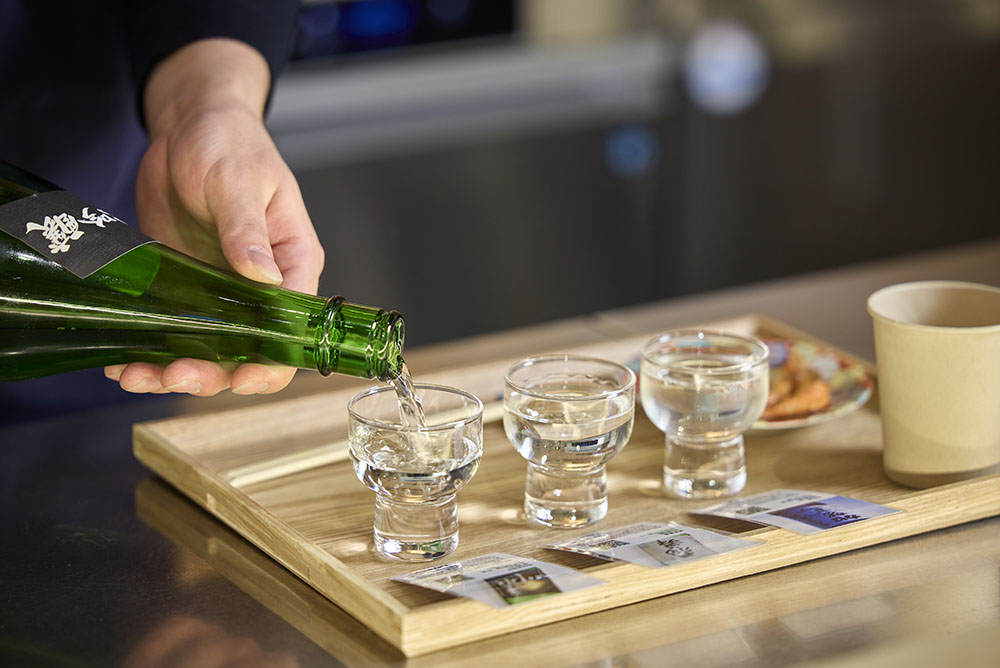
Recommended Labels for International Visitors
Label, Profile
Travel Tip
Visiting local liquor shops and sake breweries in Ishikawa provides access to labels rarely available in Tokyo. Touring breweries that welcome visitors is also highly recommended, offering a deeper understanding of the craft behind each bottle.
AI-Powered Sake Recommendation Tablet (Information as of March 2026)
Inside the store, an AI-powered tablet helps guide your selection. By entering your mood or preferred flavor profile, you can see suitable sake labels. The system is available in English, and many visitors enjoy the interactive experience of choosing and purchasing their own bottle with confidence.
Crafts: Experiencing Ishikawa’s Artistry by Hand
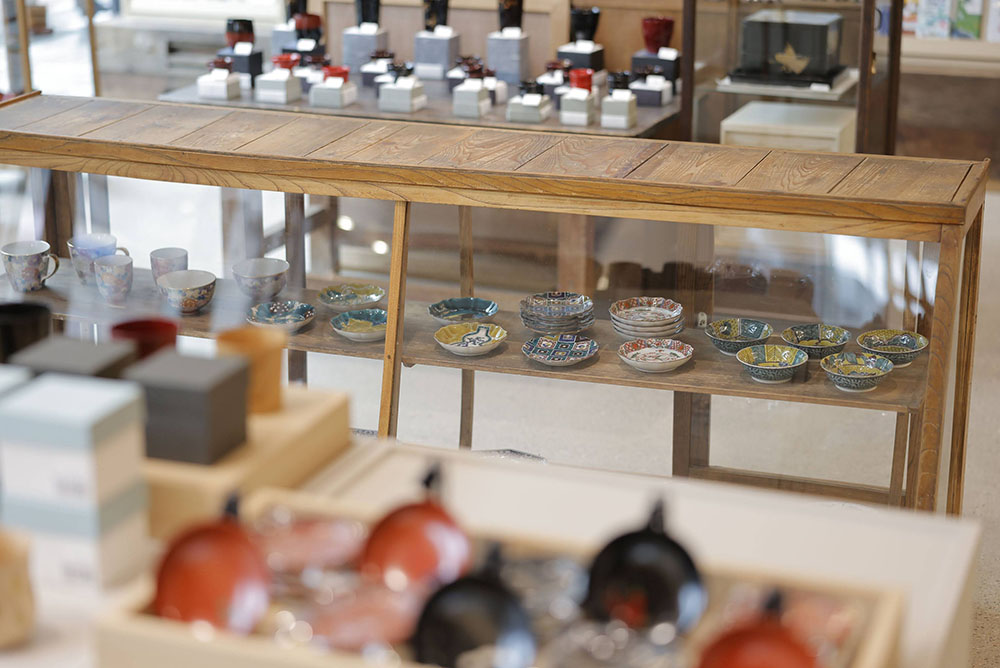
Kutani Ware
Among the many traditional crafts, Kutani ware is the most popular with international visitors. Its vivid colors and intricate patterns communicate its appeal at a glance.
Mamezara (Small Plates)
Palm-sized and richly decorated, these small plates come in a wide variety of colorful designs. Doraemon-themed plates and small shot glasses are especially popular as an accessible introduction to Kutani ware.
Kutani Ware Gacha
A playful capsule experience featuring handcrafted items such as chopstick rests, each piece individually painted by artisans, offering a unique and collectible encounter with traditional craftsmanship.

Japanese candles
Each candle is crafted using traditional methods, then hand-painted one by one with seasonal flowers. The “12-month set” includes a complete collection of 12 candles, each representing a different flower from January through December.
Takazawa Candle was completely destroyed in the earthquake, but today it continues operating from a temporary shop on the same street.
Gold leaf cosmetics
Ishikawa Prefecture accounts for the majority of Japan’s gold leaf production. Cosmetics incorporating gold leaf are especially popular, particularly among international visitors.
Wagasa (traditional Japanese umbrellas)
These umbrellas, also featured as a ceiling motif, are displayed throughout the store. Built with a high number of ribs to withstand heavy snow, their structure distributes tension through the threads, making them both durable and practical. Miniature versions are especially popular as souvenirs.

Wajima lacquerware
Wajima-nuri is created through more than 100 meticulous processes, each carried out by specialized artisans. When you hold a piece in your hands, you immediately understand the meaning behind its weight: it is not just lacquerware, but the result of time, skill, and collective craftsmanship.
Local tips
For Kutani ware, some kilns in the Kaga area offer opportunities to observe the production process up close, giving visitors a rare glimpse into the craftsmanship behind each piece.
For gold-leaf cosmetics, you will find a wider selection at specialty shops in Kanazawa's Higashi Chaya District, where tradition and refined aesthetics come together.
Journey to Noto — Visiting a Peninsula on the Path to Recovery (as of March 2026)
The Noto Peninsula Earthquake and subsequent heavy rains in 2024 left deep scars across the Noto region. Yet today, local businesses are steadily taking steps toward recovery. While some producers have resumed operations, the volume of goods reaching the Kanto region remains limited, meaning many products from Noto are still difficult to find in Tokyo.
At the same time, more areas are gradually becoming accessible again:
Notojima Aquarium: Reopened
Shiroyone Senmaida: Under phased restoration
Suzu Enden Mura: Partially reopened, production still recovering
Wakura Onsen: Some facilities now offer accommodation and bathing
“Precisely because supply cannot keep up, it becomes easier to convey the value of visiting in person.”
In other words, because products are not yet widely available, traveling to Noto holds a unique meaning. It is an honest sentiment, one that can only be expressed about Noto at this moment.

Ishikawa Terrace Yaesu – Visitor Information
Ishikawa Terrace YaesuAddress: Yaesu K Building 1F, 2-1-8 Yaesu, Chuo-ku, Tokyo 104-0028
Hours: 10:30–20:00, last order at 19:30
Access:
Instagram: @ishikawa_antenna
Just a few minutes from Tokyo Station, this is the perfect place to begin imagining your journey to Ishikawa Prefecture. A visit here may well inspire you to take the next step, whether by Shinkansen, cruise, or flight, and turn that idea into a real trip.
Official tourism website of Ishikawa (English): https://www.ishikawatravel.jp/en/