Connecting Children with the World Through Food
Petit Chefs: Learning with Philippe Batton at His French Bistro

A Taste of France in Toranomon
Wearing white chef’s hats, the children gathered around the table, watching the chef’s hands intently as a familiar egg transformed into a French dish. For one day, a bistro in Tokyo’s Toranomon district became a small classroom where food opened a window onto the wider world.
On October 17, 2026, Le Petit Tonneau Toranomon hosted “Petit Chef in Paris Bistro by Philippe Batton.” Developed by Global Media Corporation and Mogu Mogu Lab with full support from chef Philippe Batton, the event introduced children to another culture through cooking. It marked the first step in a global food education initiative that invites children to explore home cooking from around the world, starting with France.
With its distinctive red awning, the French bistro provided a setting that was itself part of the lesson. The aromas of cooking, the surroundings and the exchanges with the chef all contributed to the experience. The event demonstrated how children can encounter another culture close to home, without traveling overseas.
An introduction to France set the scene before the cooking began. Food made a distant country feel more familiar: instead of simply learning facts about France, the children experienced its food culture by preparing a French dish themselves.
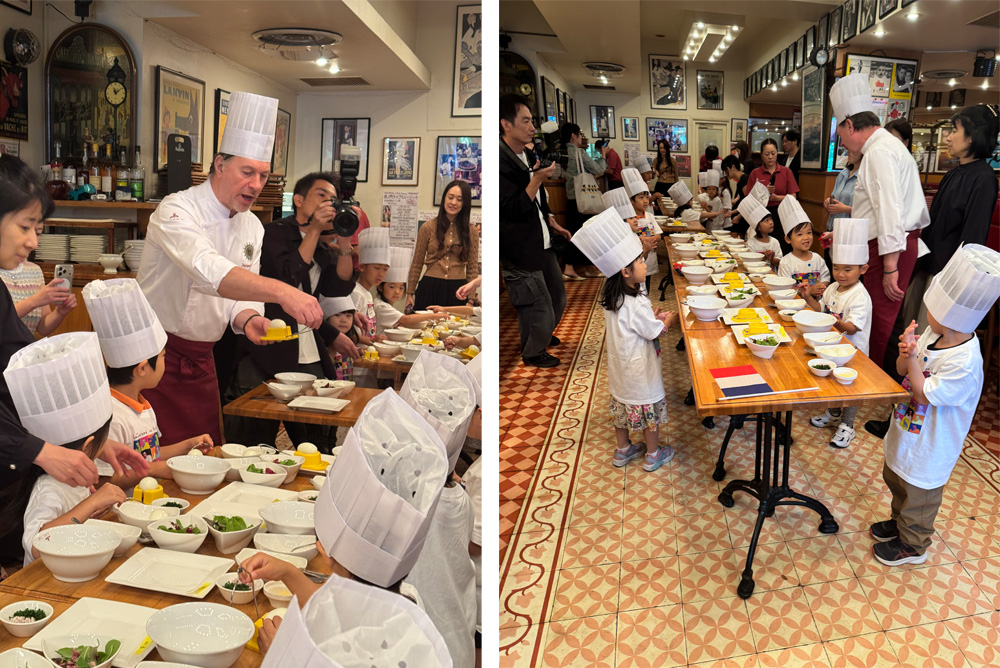
Children discover French cooking through a demonstration by Philippe Batton
Making a French Dish with Their Own Hands
The dish was œufs mimosa, a French egg starter. With boiled eggs and utensils arranged on the tables, the children followed Batton’s demonstration. Some focused on their eggs, spoons in hand; others glanced at their neighbors’ work to see how it was progressing.
With a professional chef guiding them, the children worked with the ingredients laid out before them. Each spoon movement changed the food’s shape, and individual choices gave each serving its own character. By watching the chef and preparing the dish themselves, the children came to understand something that might otherwise have remained an unfamiliar name on a menu.
Batton and the other adults offered guidance as each child worked. Preparing the same dish together at the bistro’s tables made learning a shared experience. The children took the lead, and the adults shared in their discoveries.
Even an everyday ingredient such as an egg can reveal different ways of cooking and eating across cultures. Preparing a French dish themselves helped the children discover a connection between their own familiar foods and another country’s table. It also encouraged them to approach an unfamiliar food culture with curiosity.
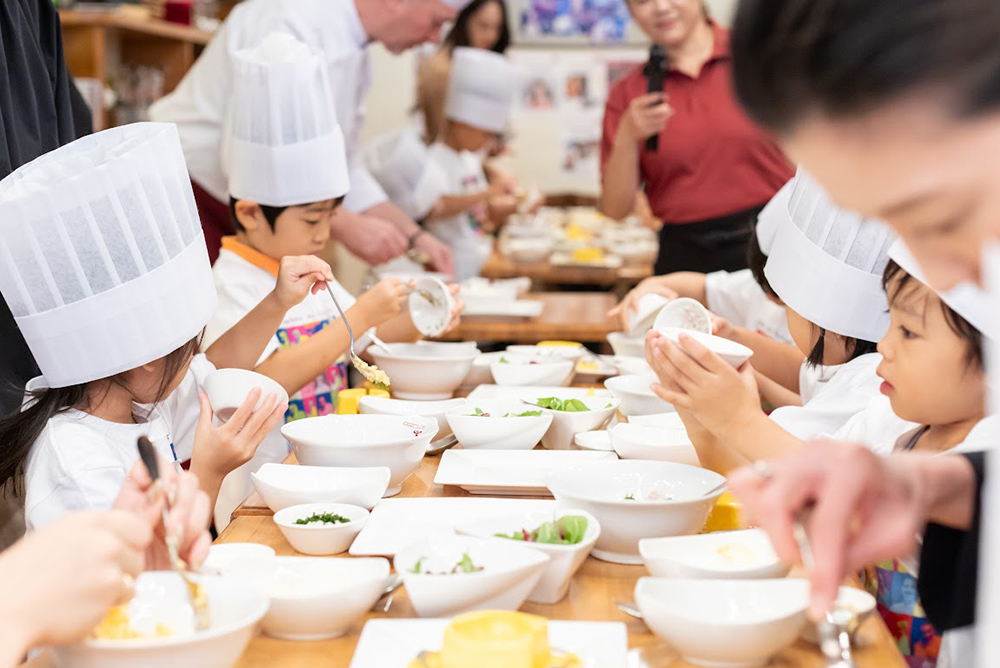
Preparing œufs mimosa, one spoonful at a time
Curiosity Begins at the Table
After the cooking session, the children received certificates and gathered for photographs with Batton. In their white chef’s hats, certificates in hand, they looked ready to celebrate their accomplishments. Each child took home a certificate as a tangible reminder of the day’s cooking and encounters.
Lunch offered the chance to enjoy their own œufs mimosa alongside a main course. The pleasure of making something led naturally to the pleasure of eating it and sharing the occasion with others. These moments around the table reflected the French art de vivre—the art of enjoying everyday life—that the event sought to convey.
Food education includes nutrition and practical cooking skills, but it also invites children to explore the countries and ways of life behind a dish. A taste discovered in childhood, or the memory of meeting and speaking with a chef, may later inspire a desire to explore the world.
This encounter with French food culture in Japan showed how a shared table can become an accessible place for cultural exchange. In the children’s hands, a simple egg became a small French dish—and perhaps the beginning of a wish to taste, cook and discover more.
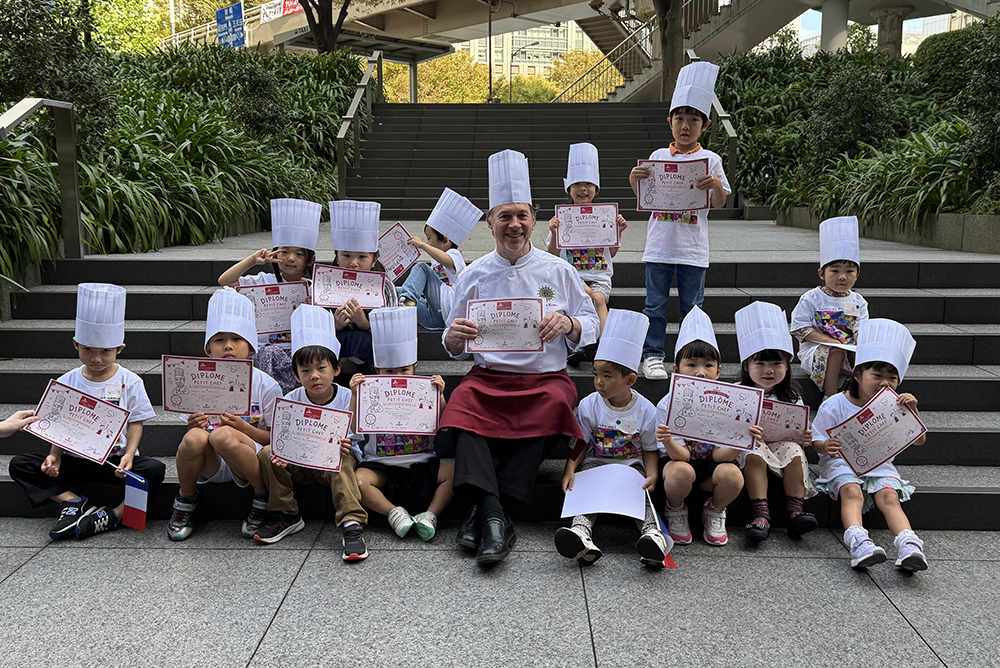
Certificates in hand, the young chefs gather for a photograph with Batton